




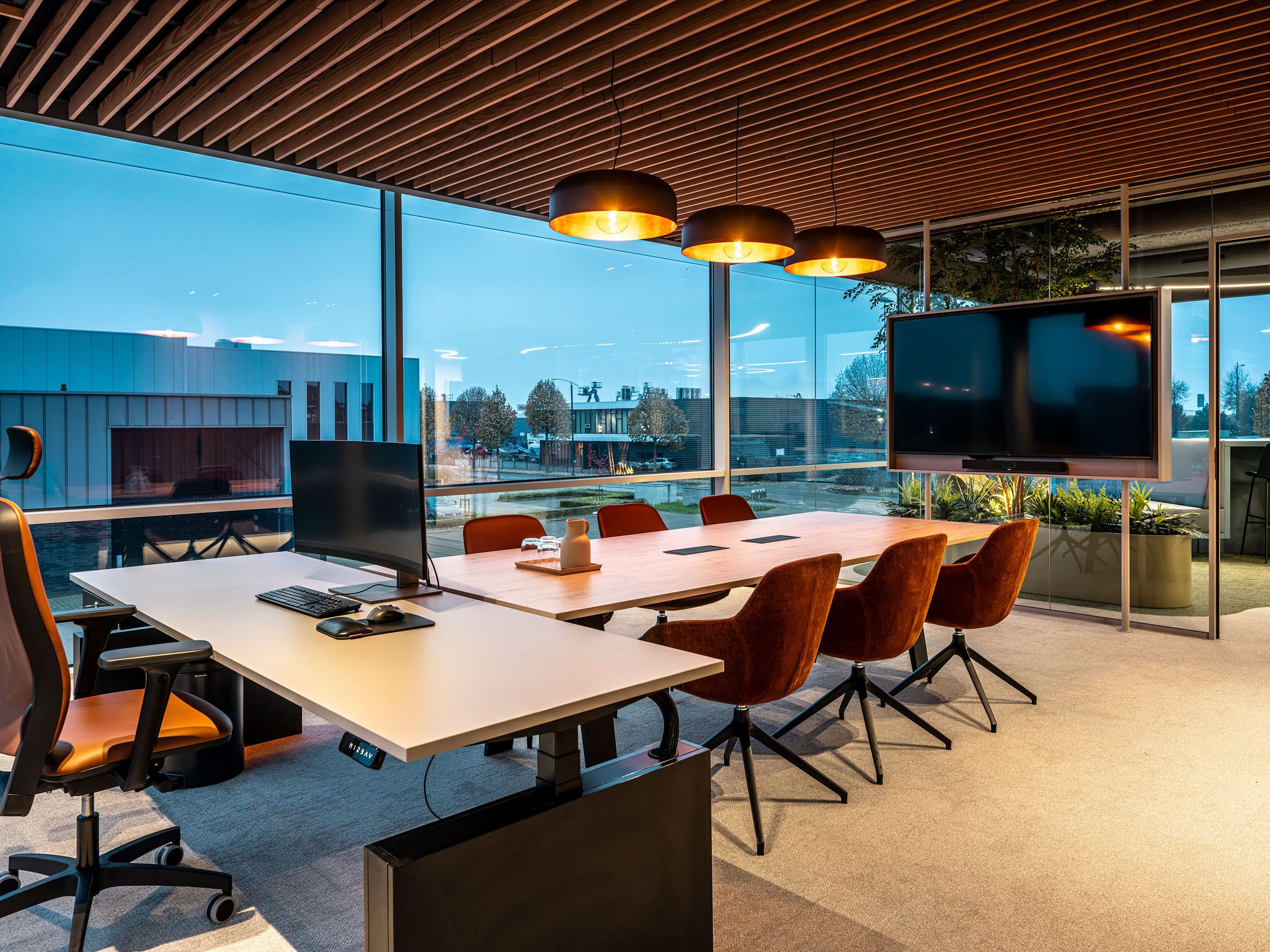
Want to know if your office lighting is really helping rather than hindering, especially in the winter months? Feel free to share a floor plan and a brief description of how the space is used, such as lots of screen work, flex spaces or meeting rooms. Then we’ll work with you to see where you can improve quickly and when a lighting plan makes sense. If you want to continue after that, we can also practically complete the process, from design and calculation in DIALux to selection, delivery and possibly installation and adjustment. Please contact us without obligation.
Back to overview
Winter dip in the office? Office lighting against Blue Monday
What light does to your energy, focus and winter dip at the office
January is one of those months when your schedule can be quite full, but your battery sometimes isn’t. You get up when it’s still dark, you drive to work in gray weather, and before you know it you’re inside all day again. Short days do something to your energy, and you often only notice it when you look outside in the afternoon and think, is it almost evening already?
You can’t control the weather. Nor can you always control your schedule. But you can influence your lighting environment. And that’s more interesting than it sounds. Light controls not only what you see, but also how awake you feel, how long you stay sharp and how much “winter feeling” your body picks up. Especially in an office, where office lighting is often the main source of light for hours on end.
That is why it pays to look at your lighting a little more consciously in January. Not because it makes you suddenly happy all the time, but because it can prevent a lot of discomfort. Think tired eyes, that dull afternoon dip or the feeling that your concentration runs out before your to-do list does.
What is Blue Monday anyway?
Blue Monday is often referred to as “the gloomiest day of the year.” It usually refers to the third Monday in January. The idea pops up every year in media and on social. Yet the concept has no solid scientific basis. It originated primarily as a campaign, with a formula that sounded very convincing but never carried as serious science.
That doesn’t mean people are “faking it.” Many people recognize a winter dip regardless of that term. Less daylight and shorter days do correlate with symptoms such as less energy, gloom and more difficulty starting up. In a more extreme form, we know it as winter depression or Seasonal Affective Disorder (SAD). Organizations such as the American Psychological Association and healthcare agencies also describe light and daylight as relevant factors in its onset and management.
And even if you don’t have a winter dip, one thing remains true: your body responds to light. Studies of office workers, for example, show that more exposure to daylight correlates with better sleep and more sleep duration. That taps into how fit you feel during the day.
So no, Blue Monday is not an “official” scientific day. But the feeling that January sometimes feels heavier is quite understandable. And that’s exactly where lighting gets interesting. In the following sections we look at what you can do with light in your working day, what to look out for when you want lighting that helps you instead of hindering you, for example through a well thought-out lighting study and attention to comfort factors such as UGR and the guidelines from NEN-EN 12464-1.
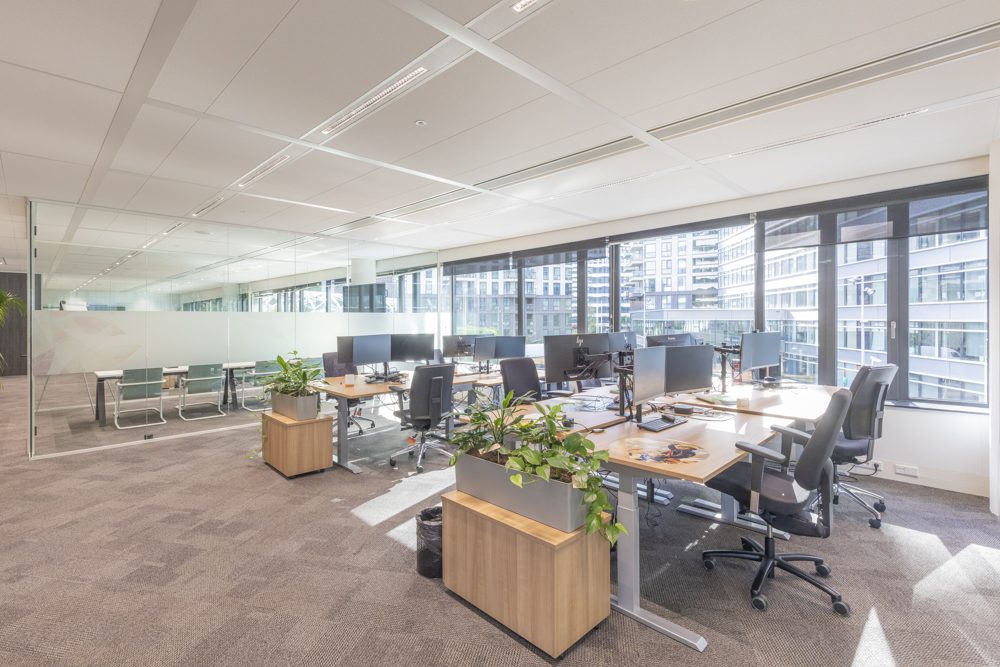
Lighting, mood and energy
Light is not only visibility, it also directs your rhythm. Think of light as the director of your day. In the morning, you want that director to say: we’re on. Later in the day, the pace may slow down. Brightness and light color play a role in this. Cooler, brighter light usually supports alertness better than warm, soft light. In contrast, warmer tones are more likely to suit rounding and calmness.
That may sound woolly, but the idea is simple. Your body responds to light stimuli. Especially when daylight is less present, the quality of your artificial light environment starts to matter relatively more. Harvard describes, for example, how (blue) light can affect your biological clock and processes around sleepiness and wakefulness.
The difference between ordinary and good light
“Ordinary light” is often: the same everywhere, the same brightness everywhere, and done. It works, but it doesn’t necessarily help you get through a dark January day. Good light does something different. Not harder, but smarter.
Good light gives your eyes rest. It prevents you from constantly looking at a bright spot, or having your screen talk back to you all day with reflections. It distributes light logically throughout the room, so not just on your desk but also on walls and walking areas. And it takes comfort into account, such as glare and flicker. Details like that seem small, until you spend eight hours a day under it.
In practical terms, this means that you can control a lot with office lighting without a complete renovation. Sometimes the biggest gains lie in a better composition of basic light and task light, a different light distribution or a setting that better suits how the space is actually used. And if you want to be sure it’s technically correct, a lighting study helps to substantiate choices with calculations instead of feelings. And so you can prevent a winter dip in the office.
Blue Monday at the office
In many offices, the problem is not in “too few lights,” but in a lighting plan that just doesn’t match how work is done. Consider a room with LED panels that feel very cool and flat. Everything is equally bright, but nothing feels comfortable. Or just the opposite. You see beautiful fixtures on the ceiling, only there is less light coming onto the desk than you expect. Especially on dark days, you notice it immediately. You read with more difficulty, your eyes work harder and by the end of the afternoon it feels like your battery is running down.
We also often see dark areas in walkways, while workplaces do get light. That creates unrest. You literally walk from light to dark. And in deep floor plans there is often a lot of contrast. Close to the window it is bright with daylight, further in, the light level drops. Your eyes have to keep adjusting. This costs energy imperceptibly.
Glare and reflection
Glare sometimes seems like a detail, until you spend a day working under it. You know the drill. You look up from your screen and the fixture “pokes” back. Or you see a white spot on your monitor that keeps moving with you as you turn your head. These kinds of stimuli make you tired faster, even if you don’t immediately realize it consciously.
That’s why in offices we often look at the UGR value. It says something about how disturbing luminaires can be from typical viewing angles. For monitor work, you often end up with a low UGR requirement in practice, because comfort counts for a lot. For example, summaries of EN 12464-1 give UGR 19 as a commonly used limit for office workplaces, in addition to requirements for light level and uniformity.
Another factor is reflection. Guidelines around screen work explicitly mention that poor lighting, reflections and flicker can contribute to temporary visual fatigue. We also practically recommend positioning luminaires to avoid reflections. You see the same thing in professional literature on workstations and lighting. Reflections and glare interfere with your vision task, so your eyes and attention must constantly correct.
Too few lux, or too unevenly distributed
When it comes to office lighting, many professionals immediately think of one number. “How many lux do we have?” Only that average doesn’t say everything. You can have an excellent average and still get complaints if the light is unevenly distributed. Then you find yourself with a bright island on the desk and a dark patch next to it. Or with enough light in the middle and not enough light towards the walls. Your eyes keep compensating, especially with a lot of screen work.
In addition, it helps to look at time. Not just at completion. Light output slowly drops due to aging and pollution. That’s why lighting standards and lighting calculations work with maintenance factors. For office work, summaries of NEN 12464-1 often mention 500 lux on the work surface and a requirement for uniformity, precisely to ensure this quality in practice.
Those who do not take this into account in the design can suddenly find themselves “just below standard” after a few years. That causes hassle in the event of complaints, evaluations or internal audits. This is precisely why we often link office lighting in projects to a lighting study rather than a quick product selection.

What can you improve on today?
You don’t have to open a ceiling immediately to notice an effect. You can already do a few smart things today that mostly revolve around resting your image. Start with your screen and desk. Preferably put your monitor at right angles to the window, so that daylight doesn’t reflect back into your eyes or onto your screen. If that’s not possible, blinds or shades often help more than people think. Guidelines around monitor work also explicitly mention these types of adjustments to reduce reflections and glare.
Dimmability and scenes
Then look at what the light above you is doing. If an area feels too bright, dimming often works better than “learning to live with it.” Many installations already have more features than they use. A simple adjustment in scenes or dimming levels can instantly make a room quieter, especially in places with lots of screens. Check to see if your lighting is dimmable via DALI or Casambi, for example.
Add task light
On the contrary, if you experience too little light on the work surface, it’s not always best solved with “everything brighter.” A desk lamp or focused task lighting can work more pleasantly than screwing up the entire ceiling. You keep the environment calmer and you provide light where you need it. This also aligns with ergonomic advice. Use lower ambient light and add task light where you read or do paperwork.
Lines of sight and contrast
Finally, literally walk one lap around the office and look with fresh eyes. Are fixtures dirty or yellowed? Then you are losing light without anyone noticing. Are there spotlights standing right in lines of sight, for example at consultation areas? If so, rotate the arrangement where possible or adjust the viewing direction. And if you see extreme differences between window zone and core, it can help to divide workstations differently. If practical, move tasks that require a lot of concentration just a little closer to daylight.
When you apply these steps, you don’t make light “harder.” You’re making it smarter. And you can often feel that within one working day, especially in January!

Structural solutions
That’s how you’ll make Blue Monday a lot less blue next year.
Think in layers
If you want to get one thing structurally right, start with layers. Not because that sounds “prettier,” but because your brain and eyes don’t need the same kind of light all day.
Basic light gives you orientation. You want the room as a whole to feel pleasantly bright, including in walking areas and toward walls. That keeps you from moving from light to dark throughout the day. Work light is the light that supports your task, so at the desk, on conference tables, at print areas or in project corners. Accent light you use sparingly. It helps give depth and create focal points, such as at a reception or presentation area.
In many offices, things go wrong because everything leans on one layer, often a flat ceiling pattern with panels. That seems efficient, but it quickly feels “gray on gray” in January. A better distribution of base and work light makes it calmer for your eyes and helps you stay sharp longer. If you want to substantiate this, it actually belongs in a lighting study. With that, you can immediately see what happens to lux, evenness and comfort throughout the room.
Smart lighting
In January, your daily rhythm often works just a little bit more awkwardly. You come in dark, you sit inside for a long time, and you miss the natural variation of daylight. You can respond cleverly to that with lighting, without it becoming a “light show.”
With tunable white, you can make the color temperature move with you through the day. Think a fresher setting in the morning, a steady setting during blocks, and a warmer setting toward the end of the day. Not because warm or cool is “magical,” but because variation helps make your environment more compatible with what you’re doing at the time.
By the way, smart regulation does not have to be complicated. A few practical examples. Set up fixed lighting scenes for focus work, consultation and tidying up. Use daylight control if you have a lot of window light, so you don’t keep unnecessarily lighting up. Add presence detection in areas where people visit briefly, such as copycorners and walkways. That way comfort stays good while your consumption goes down.
Luminaires with comfort
If you get tired faster in January, you notice bad fixtures extra hard. Comfort is not only in “enough light,” but also in what your eyes have to process throughout the day.
Pay attention to glare and optics. Choose fixtures that direct light rather than shine it. Also pay attention to flicker and driver quality. You don’t always see flicker consciously, but you sometimes feel it at the end of the day. And look at how the fixture makes the space feel. Light on walls and ceilings often makes an office feel more spacious and less flat, without increasing lux everywhere.
This is also when “cheap” regularly becomes more expensive. Not only through replacement, but also because you have to compensate more often with additional fixtures or higher settings. Quality helps you get quieter with fewer interventions.
Small experiment to check flicker
You can’t always consciously see flicker with the naked eye, especially if it happens at a higher frequency. A camera can sometimes make it visible, though, because a sensor and shutter speed “see” differently than your eyes. Film a fixture once with your phone, preferably in slow motion. If you see dark, moving bands or a pulsating image, then there is light modulation that becomes visible with camera interaction. That effect is related to the way cameras read out images (rolling shutter) and to the frequency of the light source and mains voltage.
Important detail. This is a quick indication, not an official measurement. Sometimes you can see banding mainly because of the combination of camera settings and lighting, and sometimes you see nothing while there may still be flicker. But if you see it clearly, that is indeed a good time to reconsider driver, dimming method and luminaire choice, because flicker and strobe effects are also linked to comfort complaints and visual fatigue.

Blue Monday for designers and creators
What do you look for in an office design during the winter months?
Winter light is different. The sun is lower, the contrast between window zone and core is greater, and people sit behind screens longer. That requires a design that is not only right on paper, but also right on a gray Tuesday afternoon.
Start with daylighting strategy. Not as an “extra,” but as a basis for your layout. Don’t put workstations with lots of screen work where you get reflections all day. Make sure your window areas do not become overexposed islands and that the core does not sink. If you design this well, artificial light doesn’t have to work as hard and the space feels more stable.
Next come materials and reflections. Dark floors, frosted walls, glass panes and black ceilings look sleek, but they also lower visual clarity. You can fix that, only you have to do it consciously. Consider more vertical lighting, that is, letting walls cooperate. That makes the space optically brighter and often more pleasant to sit in.
Let light contribute to the interior
Light and interiors work together. If your interior has a lot of hard lines and shiny surfaces, then your lighting should be extra quiet. If so, prefer to choose fixtures with good shielding and soft distribution. That way you avoid light “talking back” through screens, tables and glass.
The ceiling image also plays into this. A ceiling full of random light points creates unrest, especially in winter when you have less daylight compensation. Rather, work with a logical rhythm, tailored to workstations and walking lines. That not only makes it more pleasant, but also easier to explain to the client and the execution.
Flex spaces and meeting rooms require something different again. In a meeting room, you often want a booth that provides energy, but you also want to be able to switch back when presenting. In quiet rooms, on the other hand, you want fewer stimuli. If you include this variation in your concept, you avoid separate solutions per room later. Having trouble with your (lighting) design? Contact us, we will be happy to advise you.
When is it time for a lighting plan?
Some improvements you can arrange quickly, as you just read. But there comes a time when you find that “just dimming” or “adding a fixture” is no longer enough. You often recognize that moment by the same pattern. The light feels different in each place, people complain at fixed times of day, or a new layout suddenly reveals that the lighting was never really designed for use.
A lighting plan makes particular sense when something changes in space or behavior. Think of a renovation or redesign, where workstations shift and screen work takes on a larger role. Or just when complaints arise that you can’t quite place. Tired eyes, unrest in the ceiling image, reflections on screens, or an afternoon when everyone is “up” while the workday is far from finished. In winter, this is especially noticeable because daylight compensates less and artificial light takes the lead for longer.
What a lighting plan provides, above all, is clarity. Not based on feelings, but based on calculations and a realistic translation into practice. You see where the light comes in too harshly, where it falls away, and which adjustment has the most effect. Sometimes the solution lies in a different distribution, sometimes in different optics, sometimes in extra vertical lighting, and sometimes in better control. A good lighting plan prevents you from having to keep making adjustments afterwards with separate interventions that get in the way of each other.
In practice, such a study starts with input you have anyway or can easily gather. Floor plans, heights, layout, materials and especially usage per zone. Then comes the calculation, often in DIALux, with checks on light level, uniformity and comfort. That comfort goes beyond “enough lux.” You also consider glare via the UGR value, reflection risks in screen work and how the light is distributed on walls and walkways. If necessary, you also include different scenes, so you’re not building one office for one situation, but a space that can move with focus work, consultation and presentation.
The end result is a plan you can implement. You get a clear substantiation of luminaire choice and positions and you see what the effect is on workplaces and zones. That also makes choices in a project easier towards the client or internal team, because you don’t have to defend on taste, but on measurable quality. Here office lighting suddenly connects again to reality, instead of to a catalog.

Common mistakes in Blue Monday proof office lighting
1. Putting everything cooler because it feels more awake
Cooler light can help in the morning, but if you implement it everywhere and throughout the day, you often end up with a flat and unsettled light image. Especially when combined with gray days, the room then feels harsher than it needs to be. As a result, rather than becoming more energetic, people become more irritably tired more quickly.
2. Looking only at the average lux
An office can score just fine on paper, while tiring in use. This happens especially when the light is unevenly distributed. You then get light islands and dark areas, or a sharp transition between window zone and core. Your eyes keep adjusting and that takes unnoticed concentration.
3. Underestimate comfort
Glare and reflection are not always immediately noticeable, but they do eat up energy. A fixture that sits just in your line of sight, a panel that reflects back into your screen, or an overly shiny surface that reflects light. These kinds of micro irritations accumulate. In winter, with longer artificial light hours, that effect only gets worse.
4. Using controls too late
Many offices have dimming options or scenes, but hardly ever use them. Then everything defaults to one setting, regardless of time of day, daylight or activity. If you try to “add” regulation only after the fact, you often end up sticking band-aids instead of building a system that cooperates.
5. Not future proof design
Installations do not continue to perform exactly as they did on the day of completion. Fixtures get dirty, LEDs age and spaces change. If you don’t take a margin for that in the beginning, you’re more likely to get into the area of “it just feels too dark” later on, right at the time when people are getting less daylight in anyway.
If you avoid these mistakes, you’re not making office lighting overly complicated. Most of all, you make it predictable, calmer and more appropriate to how people really work in the winter.
Conclusion
Blue Monday may not be an official “scientific day,” but the winter feeling in the office is real. In January, you see more quickly what lighting does to you, because you run on artificial light longer and daylight compensates less. Then it suddenly counts whether your light image is calm, whether your eyes have to keep adjusting, and whether your workspace helps you stay sharp.
The common thread is simple. Good office lighting is not about “everything brighter” or “everything cooler.” It is about a logical layering structure, a distribution that matches how people work, and luminaires that take comfort seriously. So less glare and reflections, sufficient light on the work surface and in the rest of the room, and settings that suit the time of day. If you also take aging and maintenance into account, you avoid a situation where it’s just right now and just not right in a few years’ time.
You can catch gains today with small interventions, such as screen position, dimming, extra task lighting or smart use of daylight. But if you notice that you keep shifting and adjusting, it pays to take a structural approach. A lighting study reveals where the problem lies, and helps you to substantiate your choices to your colleagues, facility or management. Not based on feelings, but on comfort, guidelines and measurable results such as UGR, uniformity and the requirements of NEN-EN 12464-1.