





How does lighting affect your biological clock?
Why do some indoor spaces make you feel languid, flat or less sharp during the day, even when you technically have enough light to see well? And why can bright or mistimed light in the evening actually make it harder for you to unwind? That’s because of light’s influence on our biological clock. In fact, light does more than make a room visible. It also sends signals to our bodies about the time of day. Those signals influence alertness, concentration, sleep and how fit a person feels.
Especially in environments where people spend many hours indoors, such as offices, care environments, schools and other work environments, this plays a major role. Too little activating light during the day and too much stimulating light in the evening can disturb the natural rhythm. Therefore, a good lighting plan not only looks at visibility, atmosphere and energy consumption, but also at the time of use of the light and its effect on the user. In this article we explain how that works and what you can practically do with it in a project
What is your biological clock?
Your biological clock is the internal system by which your body recognizes the difference between day and night. It works roughly in a 24-hour rhythm. It also helps with processes such as waking, sleepiness, alertness and sleep. The technical term for this is circadian rhythm. In plain language, it means that your body has a natural day-night rhythm.
Light and dark help fine-tune that rhythm. During the day, light is an important signal to the body that it is time to be active and alert. In the evening and night, on the other hand, your body wants fewer light stimuli so it can switch to rest. Too much or too little light at the wrong time can affect how awake you feel, how well you can concentrate and how easily you fall asleep later in the day.
Therefore, lighting in a building is not just about sufficient lux on a work surface or a pleasant appearance of a room. Lighting also has a biological effect. Especially in buildings where people spend long days indoors, it is important to consider this in the design.
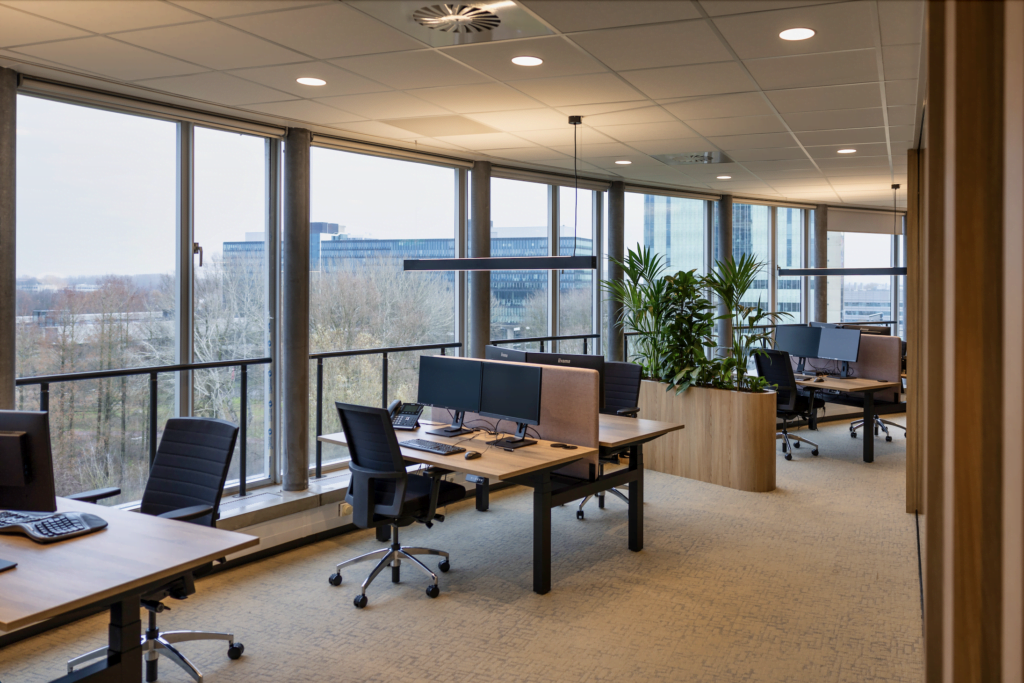
How does light affect your rhythm?
Light helps your body recognize whether it is day or night. This is especially important in the morning and during the day. Sufficient light to the eye signals to the body that it is time to be active, alert and awake. Thus, you support the natural day-night rhythm and the biological clock remains more stable. Precisely because many people spend much of the day indoors, this is more relevant in buildings than is often thought.
In the evening and night, it works differently. Light at a late hour can actually give the body the wrong signal. For example, it can disrupt the natural transition to rest and suppress the production of melatonin. That hormone helps with falling asleep. That’s why it’s not just about light or no light, but mainly about the right light at the right time of day.
So for a lighting plan, that means looking beyond visual comfort or energy consumption. The question is not only whether a room is bright enough, but also what signal the lighting is sending out at that moment. That makes lighting relevant in offices, education, healthcare and other environments where people spend many hours indoors.
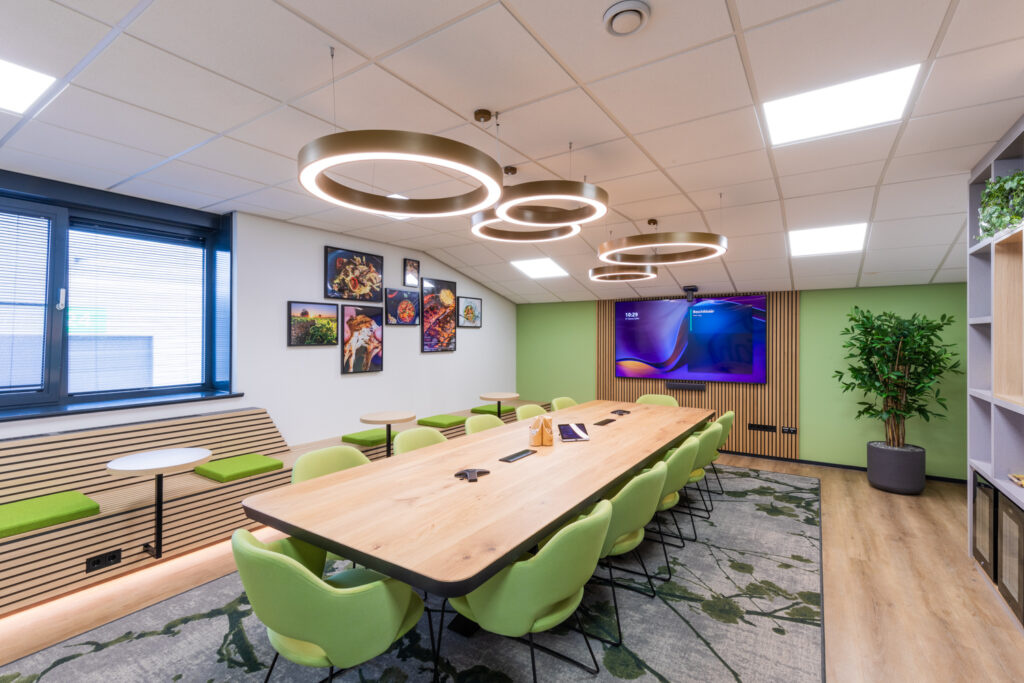
What lighting characteristics make the difference?
If you want to properly understand the influence of lighting on the biological clock, you have to look broader than just color temperature or the lumen count of a fixture. Those say something about radiance and luminous flux, but not automatically enough about its biological effect. Timing, amount of light to the eye, spectrum and duration of exposure also play a role.
Timing
Timing is perhaps the most important factor. The same light can be supportive at one time of day and disruptive at another. Light in the morning and during the day helps to reinforce rhythm. Later in the evening it often works the opposite way. Therefore, lighting should always be assessed in relation to the use of the space and the time when people are there.
In practice, this means that a room where people work early requires a different lighting strategy than a room that is primarily used later in the day or in the evening. So a good design looks not only at the luminaire, but also at the user’s daily rhythm.
How much light reaches the eye
For the biological effect of light, it is not only how much light a luminaire produces that counts, but especially how much light actually reaches the eye. In lighting technology, horizontal lux on the working surface is still often considered. For biological effects, light at eye level is much more relevant. Especially in the viewing direction of the user. This is why in professional literature you increasingly encounter terms such as vertical illuminance or melanopic EDI.
This is also exactly why a room can appear adequately lit on paper, yet users still feel languid or flat. A work surface may be perfectly lit, but if little usable light arrives at eye level, the biological signal is still limited. Especially in deep floor plans or spaces without good daylighting, this is a major concern.
Spectrum and color perception
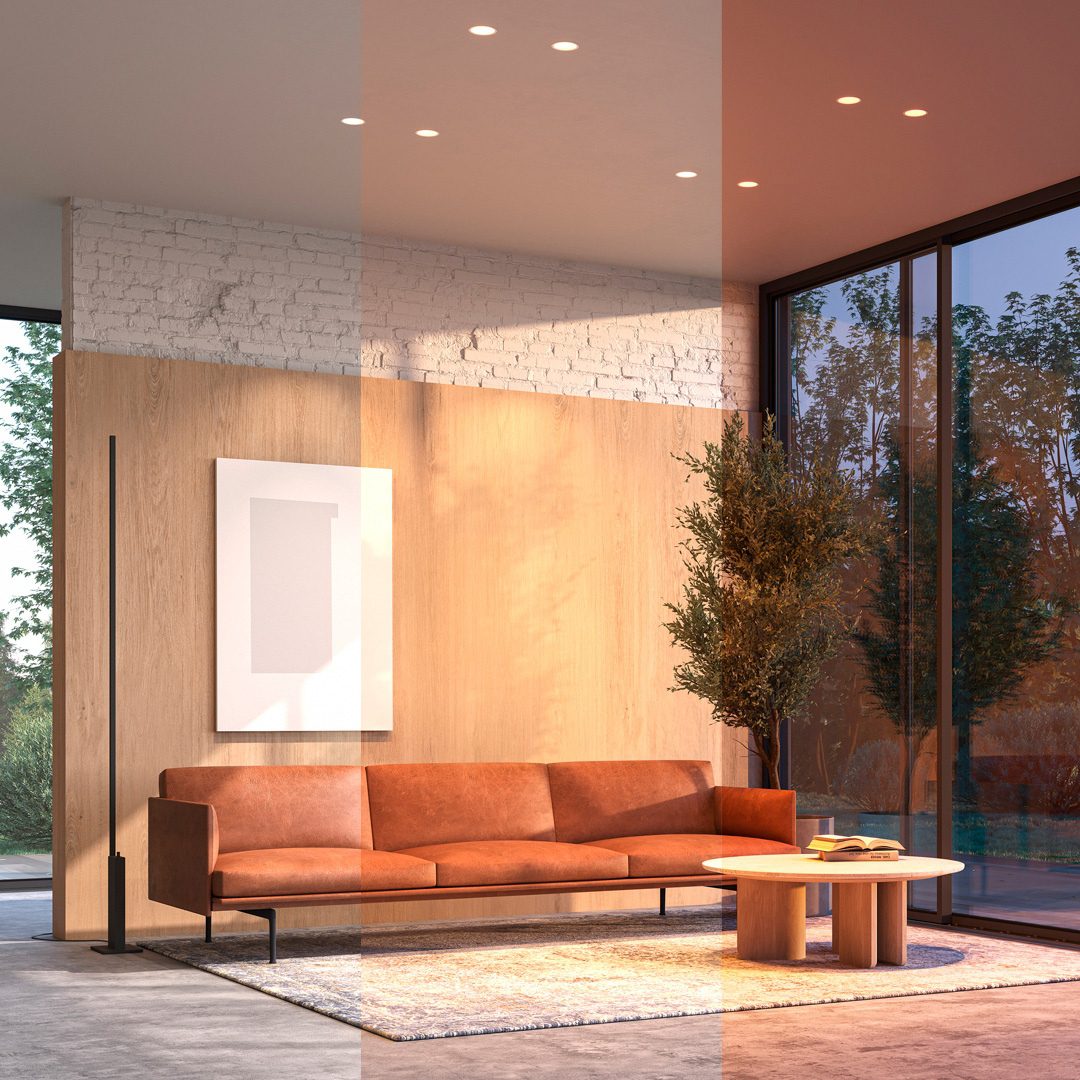
In addition to timing and light level, the spectrum of light also plays a role. During the day, light with a higher biological stimulus, often light with relatively more short-wave energy, can be more activating. Later in the day, on the other hand, calmer and biologically less stimulating light fits better. This is often translated into cooler light during the day and warmer light in the evening. But this oversimplification is not always correct.
Therein lies another common fallacy. More Kelvin is not automatically better for the biological clock. The color temperature, i.e. the CCT in Kelvin, says something about how warm or cool light looks, but not how biologically effective the light is. So it is not a reliable predictor of the biological effect of that light. Even two designs with the same Kelvin value can be biologically distinctly different.
Duration and regularity
Not only the time and type of light are important, but also how long and how regularly a person is exposed to it. A brief peak in the morning is different from an entire working day in a well-supported light pattern. This is because the biological clock responds not to one isolated moment, but to the total diurnal sequence of light and dark. As a result, a stable pattern is often more important than a few isolated strong light moments.
Context is also important here. Previous light exposure, sleep deprivation and the user’s personal rhythm help influence how a person responds to light. That doesn’t mean you have to make each project completely individual. However, good lighting design does require nuance. So one simple rule of thumb for every room doesn’t work.
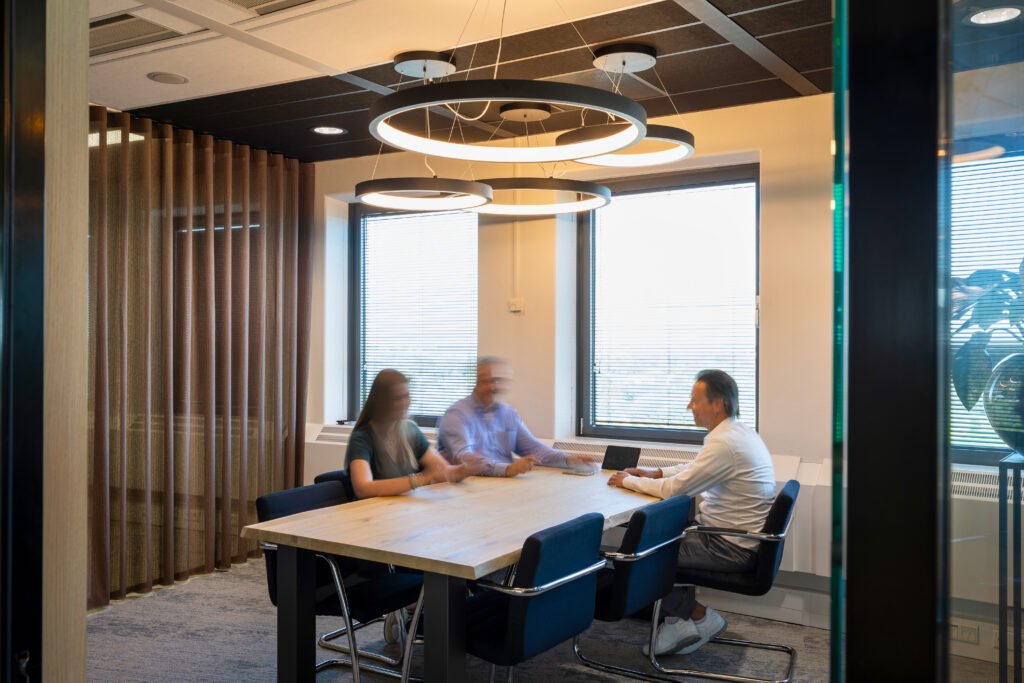
Why daylight is the foundation
When it comes to supporting natural rhythms, daylight remains the most important foundation. Daylight naturally changes in intensity and composition throughout the day . As a result, it provides a much more natural day-night signal than artificial light. Moreover, the CIE (Commission Internationale de l’Eclairage, or International Commission on Illumination) recognizes that time outside during the day is associated with better health and well-being. Exposure to daylight is an important factor in this.
That doesn’t mean artificial light is unimportant. Certainly not in offices, schools, healthcare environments or other buildings where people spend long periods of time indoors. But artificial light is usually supplementary, not the perfect replacement for outdoor light. That’s why façade openings, the position of workstations, the depth of space and the division between façade zone and core zone are all relevant in a lighting plan. The better you utilize daylight, the more logical your electric light complements it.
In practice, that also means not wanting to design out daylight unnecessarily. Closing off too much, zoning incorrectly or placing all workplaces deep inside the building makes it more difficult to achieve a good biological light level during the day. This is precisely why the influence of daylight should be factored into the design early on.
What is biodynamic lighting?
Biodynamic lighting is lighting that changes throughout the day to better match the user’s natural diurnal rhythm. Usually this is done by adjusting the light level and sometimes by changing the light color along with it. In this way, you not only want to illuminate a room well, but also have the light better match the time of day. In the market, terms like circadian lighting or human centric lighting are also used for this. The CIE prefers to use the term integrative lighting for this purpose.
What is important, however, is to look at it soberly. Biodynamic lighting is not a panacea. It only works well if the design, control strategy and space are right. Think, for example, of the right zoning, sufficient light at eye level, a logical link with daylight, control of glare and control that fits the use of the space.
Thus, biodynamic lighting should never be separated from the rest of the lighting design. A biologically interesting concept that is visually unsettling, glaring or does not fit the function of the space is still not a good solution. It is precisely the combination of visual quality, use function and the right light at the right time that makes this topic relevant in real projects.
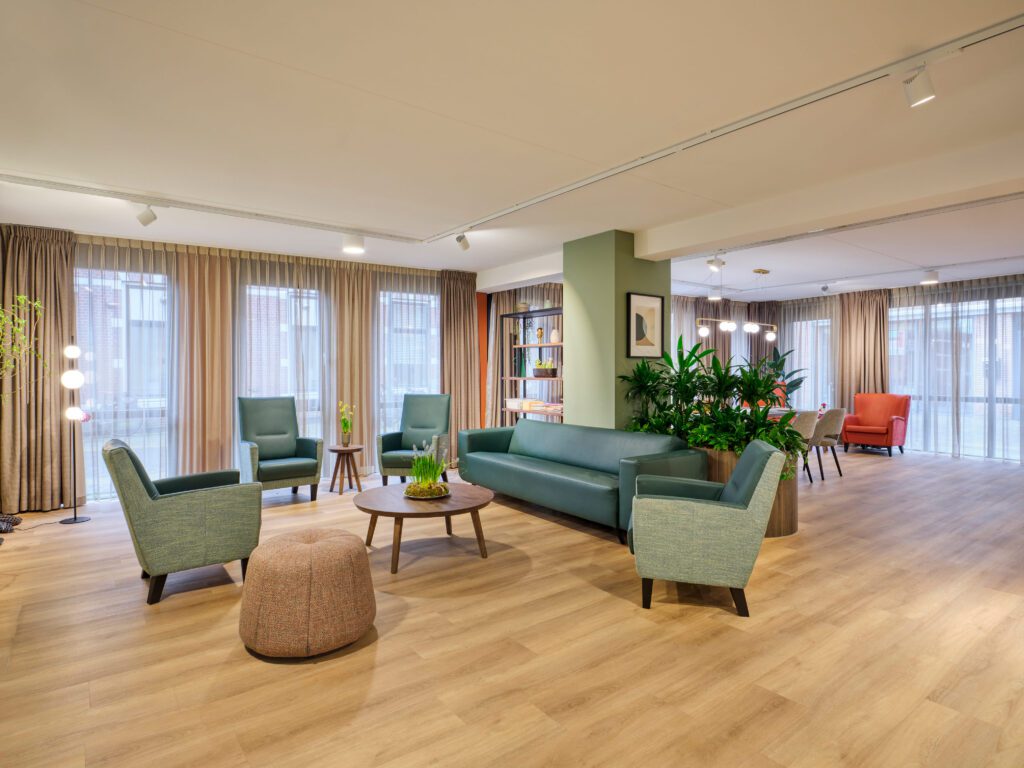
When does biodynamic lighting add value?
Biodynamic lighting has added value especially in spaces where people spend long periods of time indoors and where the natural difference between day and evening is less noticeable. This applies, for example, to buildings where users spend hours at a time indoors, do not get out much or depend on artificial light in the room. In such situations, a well-tuned lighting plan can provide more activation during the day. Later in the day, the same solution can actually support more calmness.
Offices
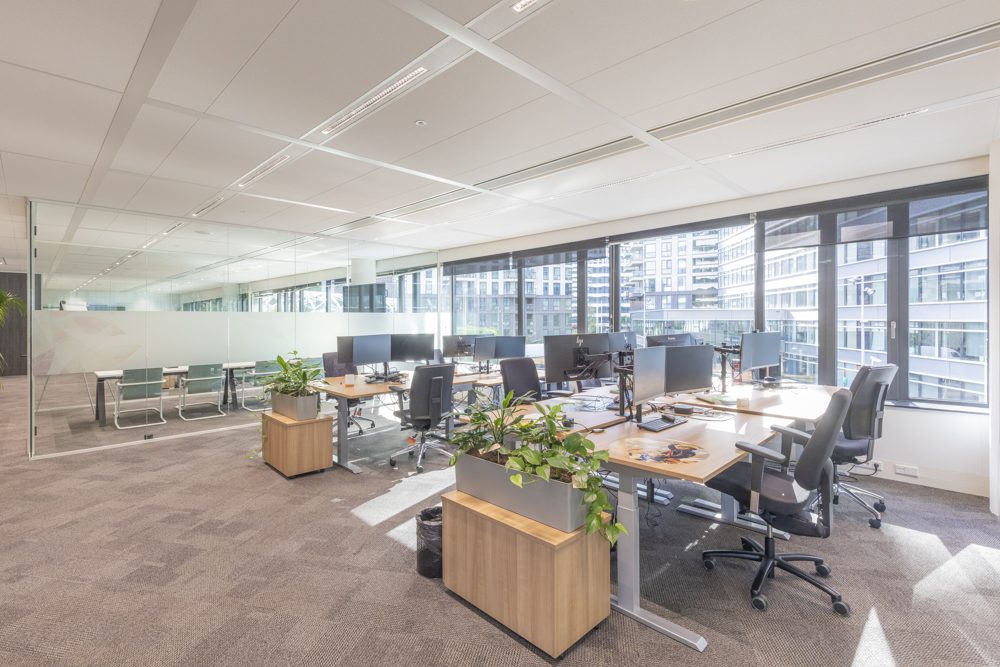
In office environments, biodynamic lighting is of particular interest when employees work many hours behind a screen, do not get out much and depend on artificial light for much of the day. In such spaces, the difference between technically good light and biologically supportive light can be significant. Especially in open-plan offices, deep floors or buildings with limited daylighting, it makes sense to look beyond just horizontal lux at the desk.
This does not mean that every office automatically needs a fully dynamic lighting system. The added value is mainly in situations where people structurally get too little daylight to the eye, where workstations are located deep inside the building or where the lighting remains at one static level all day. In those types of projects, biodynamic lighting can contribute to a stronger daytime rhythm and more alertness during the day, provided it is properly designed and controlled.
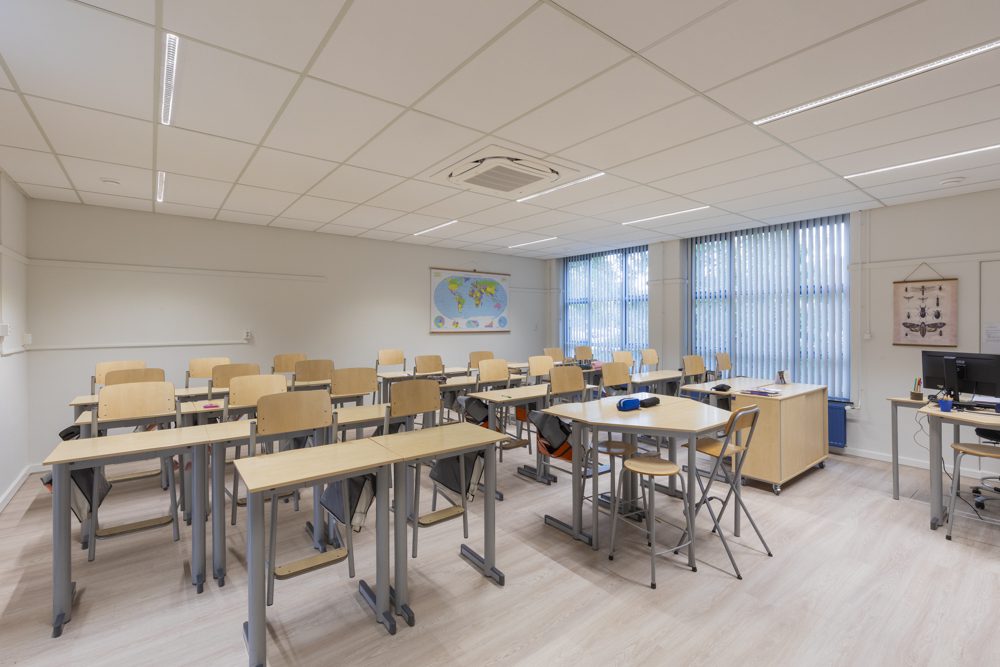
Education
In educational spaces, this issue is relevant because pupils and students are often inside for long blocks. At the same time, morning light in particular is important for alertness and concentration. Research on school environments shows that lighting conditions in classrooms are related to performance. So daylight and the quality of the lighting environment are also serious design variables, not just an afterthought.
For schools and educational buildings, the greatest benefit usually lies not in spectacular color changes, but in a calm and well thought-out lighting structure. A well-lit morning setting, sufficient light at eye level and a clever coordination between façade zone and core zone are often more valuable there than a system that sounds especially technically impressive.
Care environments
In care environments and residential care, biodynamic lighting is of particular interest because residents and patients often do not get outside as much. As a result, they get a weaker light-dark signal faster. With older users, it is also a factor that the eye allows less light through. As a result, more light is often needed to achieve the same biological effect as with younger people.
At the same time, this very audience requires nuance. Not every dynamic solution automatically works well. Research shows that results in care environments vary and depend strongly on the actual light exposure, the time of day, the health of the user and the way the system is set up. So the added value is not in the label biodynamic, but in a design that truly connects to use, rhythm and the spatial context.
Spaces with little natural light
Biodynamic lighting can also add value in rooms with little daylight, deep floor plans or workplaces far from the façade. In these types of situations, the biologically relevant light at eye level often drops off faster than you would expect based on a standard lux calculation. Among other things, the location in the room, the viewing direction and the use of blinds strongly influence how much daylight ultimately reaches the eye.
In winter or on dark working days, this effect becomes even more pronounced. Especially in northern European working environments, the difference between outside light and inside light can then be large. Biodynamic lighting can help provide a clearer daytime signal there, but usually only if it is part of a broader approach involving daylight utilization, smart zoning and an appropriate control strategy.
How do you apply this in a lighting plan?
A good lighting plan for the biological clock starts not with a fixture, but with the space. Where are the workstations located, how much daylight enters, how deep is the floor plan, when will the space be used and who is primarily staying there? Only then do you decide whether biodynamic lighting really adds something and how far you want to go in this regard.
1. Look at the daylight
The first step is always to look at daylight. Workplaces near the facade often receive much stronger daylight during the day than places deep in the room. As a result, not every area needs the same artificial light. Anyone who wants to apply biodynamic lighting properly must therefore not only choose fixtures, but also take a critical look at the layout of the room and the position of workstations in relation to windows and other facade openings.
Therefore, sometimes the biggest gain is not in increasing the general light level, but in positioning users more intelligently or creating areas where more light is available at eye level during the day. Project research shows that achieving biological lighting goals in all workplaces is not a given, even in buildings with decent amounts of daylight.
2. Distinguish between zones
In a good lighting plan, do not treat the façade zone and the core zone as one. In the façade zone, daylight already cooperates and the role of electric light may be different than in the center of the building. In contrast, the core zone often requires extra attention to light at eye level and the timing of control.
That’s why it pays to think in zones. Not only to better match space use, but also to balance energy and comfort. The DOE shows that zonal control and targeted supplemental lighting can be useful to better meet biological lighting goals without unnecessarily cranking up the whole system everywhere.
3. Tunable White if it really adds
Tunable white can be useful, but not every project needs it. It is particularly interesting in spaces where users spend long periods of time indoors, where the light color is allowed to move functionally throughout the day, and where the control is actually adjusted properly. In other projects, a well-chosen fixed light color often suffices. Especially when combined with dimmability and smart zoning.
This will also help you avoid a common mistake of thinking that dynamics are automatically better. If the room already receives good daylight during the day, or if users are only present for a short time, an extensive tunable white system is not necessarily the best investment. So the question is not whether it can be done technically, but whether it really solves anything in that space.
4. Work with dimming and scenes
Biodynamic lighting only works well if the control is right. In practice, that usually means a combination of dimmability, time control, presence and daylight control. This way you support daytime lighting where needed. At the same time, you prevent lighting from burning unnecessarily hard when daylight is already taking over.
In this regard, scenes are often more valuable than purely theoretical settings. A morning scene, a standard workday scene and a quieter late afternoon scene are more practical in many projects than a system that is smart only on paper. The control strategy should always match how the room is actually used, otherwise the system will either be ignored or manually overridden.
5. Avoid glare and contrasts
A biologically activating lighting concept is not a good lighting concept if it comes at the expense of comfort. Glare, harsh contrasts and visual unrest can make a room feel unpleasant, even if the biological objective is met on paper. Therefore, vertical light levels, luminance ratios, screen work and viewing directions should always be evaluated together.
This is also an important practical point in office environments. If you want to achieve more light at eye level, you have to think carefully about luminaire position, shielding, beam distribution and reflections in the room. Otherwise, you will increase the incentive, but sacrifice user comfort.
6. Keep balance
Organic lighting is never separate from the basics of good lighting design. A space should still be pleasant to work, learn, recover or live in. That means that visual comfort, task lighting, evenness, orientation and the function of the space should always weigh in. Non-visual effects are thus an additional layer. Not a license to ignore the basics.
Common mistakes
Controlling for color temperature only
One of the most common mistakes is steering by color temperature alone. Cooler light during the day and warmer light in the evening sounds logical, but Kelvin alone says too little about the biological effect. The CIE even calls it misleading to talk about healthy or unhealthy light on the basis of CCT alone. It is always about the combination of light level, spectrum, timing and total light exposure in the room.
Tunable White without proper regulation
A second mistake is applying tunable white, but without proper control. Then you technically have a dynamic system, but in practice it changes too little, at the wrong time or in a way that does not suit the users. As a result, the system often has little added value. While making the project more complex and expensive.
Focus on fixture rather than people
Also, it is still often thought too much from the luminaire and too little from the eye of the user. A luminaire may have a high luminous flux, but that does not automatically mean that sufficient biologically relevant light arrives at eye level. Especially in deep floor plans or with unfavorable viewing directions, this can be quite disappointing.
Not looking at glare and contrasts
Another pitfall is wanting to design biologically activating lighting without properly controlling glare and contrasts. Then an attempt is made to achieve higher vertical light levels, but the space actually feels less pleasant in use. In practice, this requires trade-offs between comfort, energy, luminaire choice and biological goals.
Biodynamic lighting everywhere
Finally, it is sometimes thought that biodynamic lighting is necessary in every room. It isn’t. In some projects, a good foundation with adequate daylight, logical zoning, appropriate light levels and simple control is already exactly what is needed. That very nuance often leads to better design.
Is biodynamic lighting always necessary?
No, definitely not. Not every project requires a fully dynamic system with changing light color and extensive time control. Often a strong foundation is more important. Consider good use of daylight, smart positioning of workstations and calm, logical control.
The right solution depends on the space, duration of use, target audience and budget. In an office where people are inside all day, a more dynamic system may be of interest. In a traffic room, meeting room or space where people only spend a short time, it is often less relevant. So the trick is not to apply it everywhere. The point is to determine where it really adds something.
Need advice?
Want to know if biodynamic lighting really adds value in your project? Then it is wise to look not only at fixtures or light color, but at the overall picture. How is the space being used, how much daylight is available, where are users located in the space and what role can lighting play in this in practical terms?
At Lixero, we therefore not only look at the technology, but also at the application. We think along with you about use, daylight, light levels, comfort and control options, so that the lighting suits the function of the space and the people who stay there every day.
Whether it’s an office, educational space, healthcare environment or any other indoor space where light needs to do more than just illuminate, we’d be happy to help you with an appropriate solution. From lighting plan to realization. Feel free to contact us if you want to spar about the right approach for your project.