




What is SDCM?
What is SDCM in lighting?
SDCM says something about the color consistency of light sources. It indicates how small or large the color deviation is between luminaires that on paper have the same light color. So two 3000K fixtures may look slightly different in practice. SDCM helps interpret that difference.
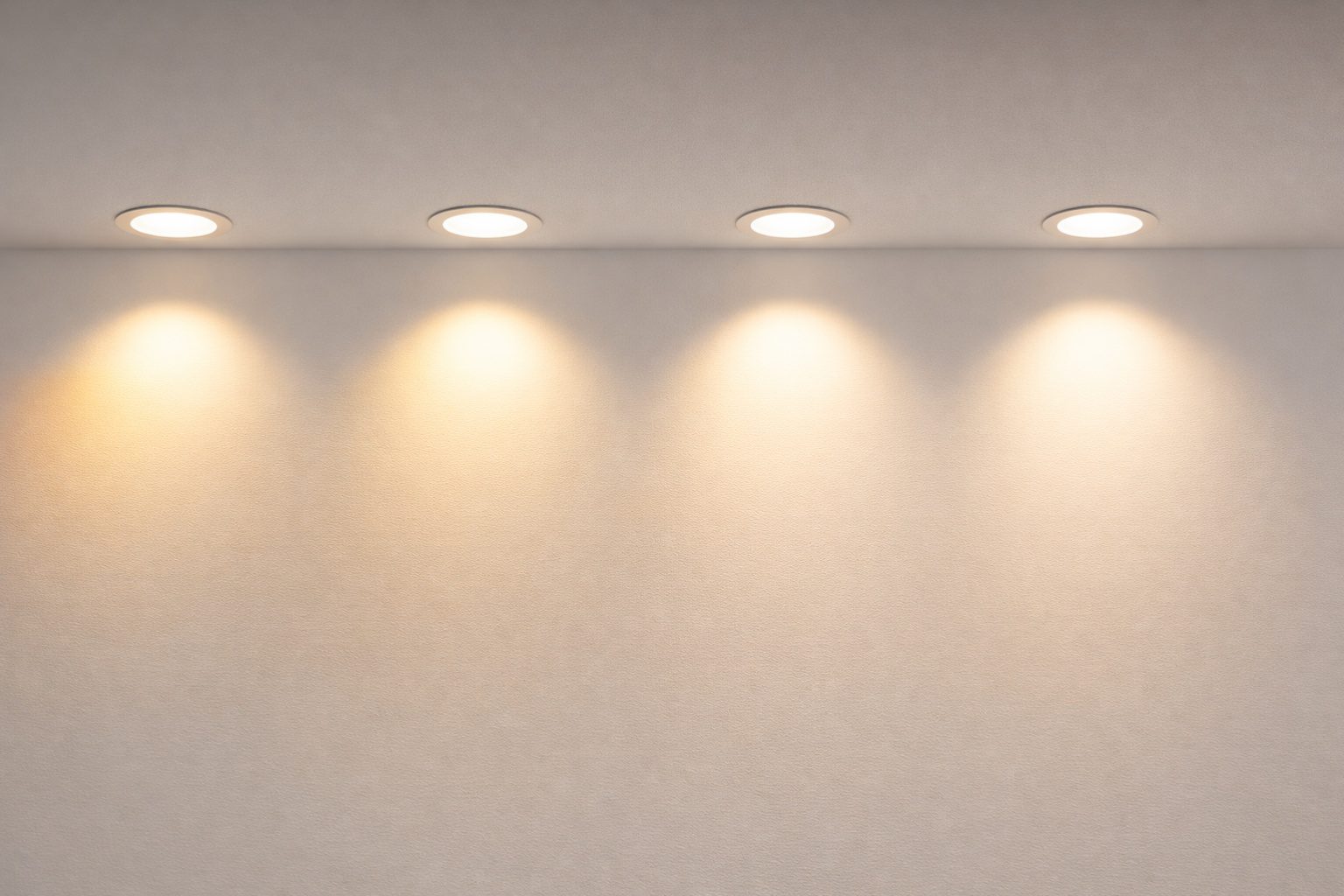
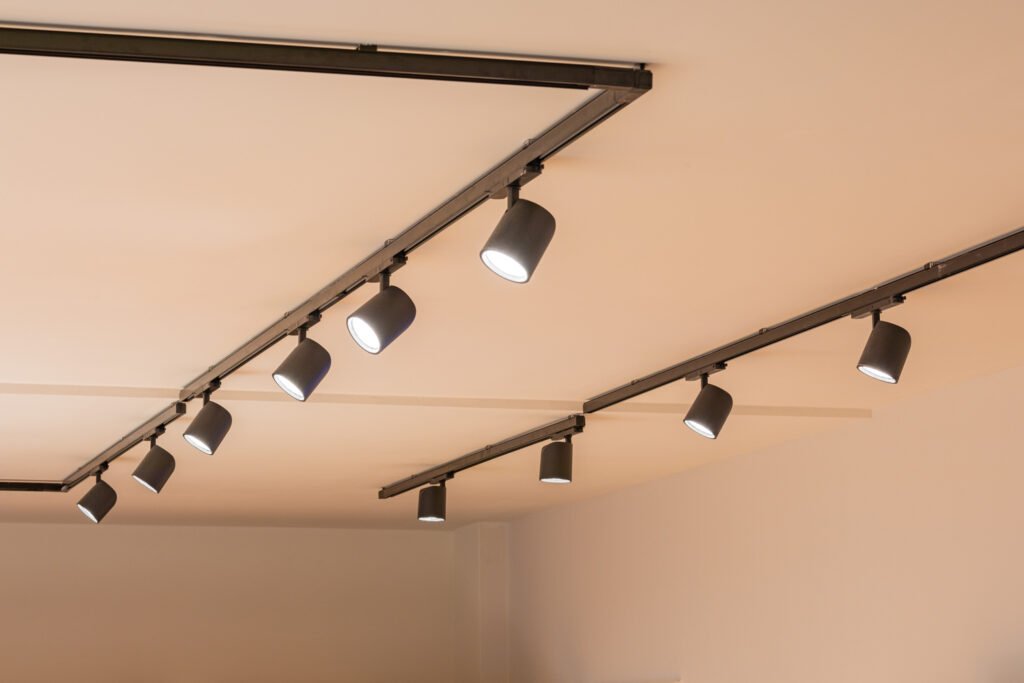
This is especially relevant in projects where multiple luminaires are used simultaneously. Think of a track in a store, a ceiling with downlights or a wall lit with multiple spotlights. Especially in situations like that, small color differences stand out more quickly and the overall picture can become unsettled.
What does SDCM mean?
SDCM is a technical way of expressing color difference between light sources. The value shows how close the actual light color of a luminaire is to the intended color. The lower the SDCM value, the smaller the deviation and the more consistent several luminaires look together.
In practice, this is especially important when luminaires are used side by side or in one line of sight. This is when you look not only at lumens, wattage or color temperature, but also at whether the light image comes across as one calm entity.
What does SDCM stand for?
SDCM stands for Standard Deviation of Color Matching, or Standard Deviation of Color Matching. The term is linked to the so-called MacAdam ellipses, a method for making color deviations visible and measurable. In the lighting world, SDCM is therefore often used as a practical measure of color consistency.
What does this value say in practice?
The SDCM value says how much color dispersion is allowed around a given color point. The lower the value, the smaller the spread. Thus, a fixture with 2 SDCM or 3 SDCM generally gives a tighter and quieter image than one with 5 SDCM.
As a rule of thumb, you can say that 1 to 3 SDCM is considered neat and consistent in many indoor projects. From 4 SDCM onward, differences become more apparent. At the same time, this is not a hard limit. Whether you really see a difference also depends on the application, the substrate, the viewing direction and how many fixtures you have in view at once. A white wall or a tight ceiling will betray color differences faster than a single spotlight in a less critical environment.
Therefore, SDCM is especially relevant in projects where tranquility and unity are important. Think of offices, retail, hospitality, healthcare and other environments where many identical luminaires together form one light image. In such cases, SDCM is not a detail in the datasheet, but a specification that directly affects the end result.
Why is SDCM important in LED lighting?
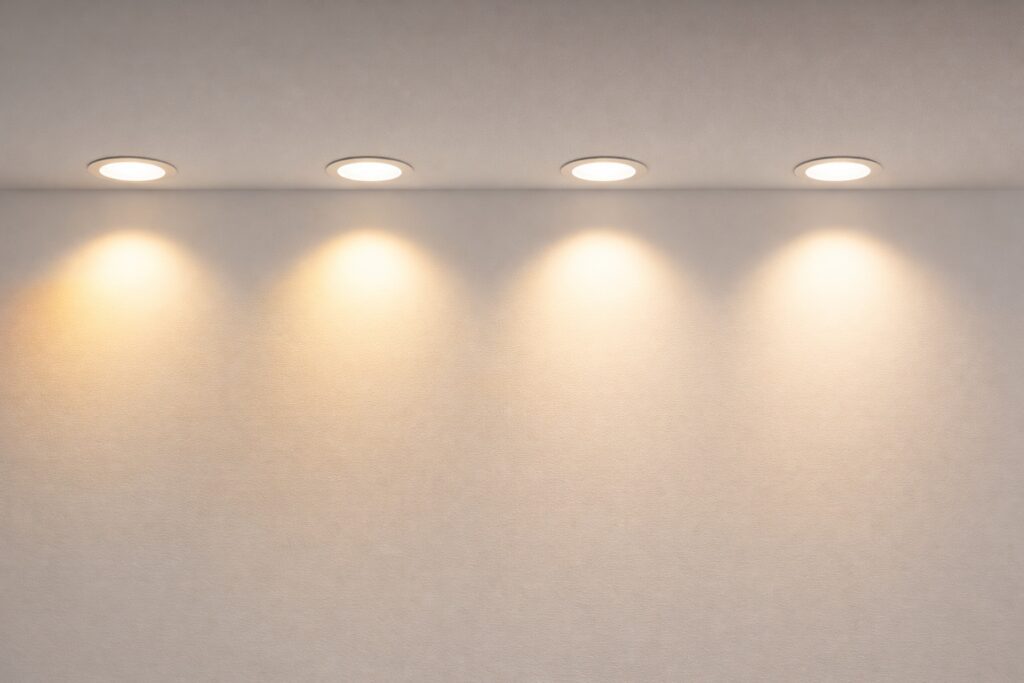
Especially with LED lighting, you often encounter SDCM, because small color differences between light sources can become visible even if the specified color temperature is the same. So two 3000K fixtures may not look exactly the same in practice. SDCM makes that mutual deviation measurable and helps judge how consistent a series of fixtures looks.
This is relevant in product selection and specification. In a datasheet you often see values for lumen output, CRI and efficiency, but these say nothing about the mutual color distribution within a series. Especially in projects where many luminaires together form one light image, SDCM can therefore be just as decisive for the final result as the specified light color itself.
Why do you see color differences in LED?
With LED, white light is not created in exactly the same way as traditional light sources. The light is constructed from semiconductor technology and phosphor layers. As a result, small manufacturing tolerances can affect the final color point. This difference is often small, but in a room with several fixtures next to each other, it can still become visible.
This does not mean that LED is unreliable. Quite the contrary. But it does mean that color consistency must be explicitly monitored. That’s why professional manufacturers list that property separately in their data sheets, for example, as 3 SDCM. That way you know not only what light color you’re choosing, but also how tightly that color is maintained within a series.
In which projects does this stand out particularly?
Color differences are especially noticeable in projects where many identical fixtures are visible at the same time. Think of offices with long ceiling lines, retail projects with a series of track spots, restaurants with quiet ceilings or healthcare environments where an even light image is important. The more fixtures you see in one line of sight, the faster small deviations will be noticed.
Wall lighting is also sensitive. Small color deviations can become very visible when multiple fixtures light a single white wall. In such situations, you no longer look at one individual fixture, but at the overall picture. Then color consistency suddenly becomes very concrete.

What is color consistency?
Color consistency is the degree to which multiple light sources show the same light color among themselves. So it is actually the practical effect that SDCM is about. If color consistency is good, luminaires look like one entity. If it is not as good, subtle differences may become visible, even if the same color temperature is stated on each product.
For the user, that is more important than the theory behind it. In a project, you don’t just want to know that a fixture is 3000K, but also whether ten or twenty fixtures together look calm and uniform. This is precisely why color consistency is a more useful concept in practice than just the bare SDCM abbreviation.
Color consistency in a series
Within a luminaire series, color consistency is especially important when products are used close together. This can be seen, for example, with downlights in a grid, with light lines in an office or with track spots that together illuminate a wall or presentation area. If the color spread within that series is too wide, the whole looks less sleek.
That’s why with professional LED modules and luminaires, you often see manufacturers deliberately communicate a tight value, such as 2 SDCM. This is not a marketing detail, but a specification that helps keep the visual outcome predictable when multiple luminaires come into view together.
A peaceful look
So a project is not just judged on lux values, UGR or energy use. The visual overall appearance also counts. If fixtures look slightly different from one another, a ceiling can appear more restless than intended. This is especially true in clean interiors, with bright ceilings and with uniform wall surfaces where differences are little masked.
This is relevant to designers, installers and project managers because it affects both the experience of the space and the quality of delivery. A luminaire can score well technically, but still give rise to discussion if the light image does not appear as a whole. This is precisely why color consistency is a practical specification and not just a technical footnote in the datasheet.
What is the difference between SDCM and MacAdam?
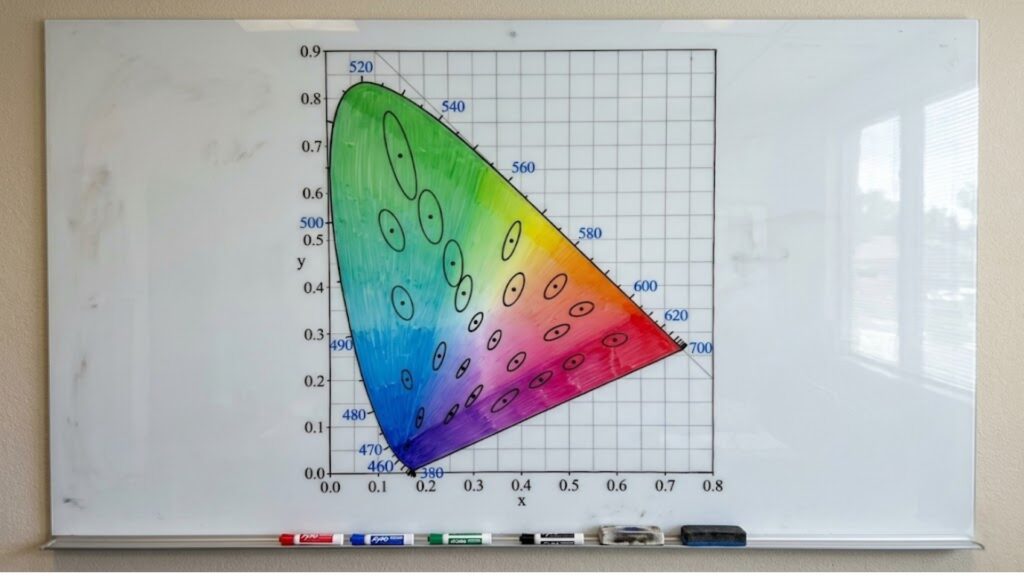
SDCM is the way color deviation from a light source is expressed. That system is historically based on the work of David MacAdam, who showed that small color differences are not equally visible throughout the color space. The CIE (Commission Internationale de le’Eclairage) describes 1 SDCM as the size of the original MacAdam ellipse. At the same time, the CIE also indicates that MacAdam ellipses are not always the most practical specification for modern light sources and recommends u’v’ circles for general lighting. In the market, therefore, you still often encounter both terms, but data sheets and product specifications usually use SDCM.
What are MacAdam steps?
MacAdam steps are tolerance zones around a target color. They indicate how much color deviation is allowed before the difference becomes visible. The more steps, the greater the spread. So a low value represents tighter color consistency, a higher value represents more inter-range variation.
Importantly, MacAdam was not originally an LED term. It existed long before LED and was also used to describe color dispersion of fluorescent lamps. That explains why the term is still widely used even though modern LED specifications have become more technical and precise.
Why are SDCM and MacAdam used interchangeably?
This confusion makes sense. Historically, SDCM has been directly linked to the MacAdam ellipses. Organizations literally call 1 SDCM the size of the original MacAdam ellipses. As a result, language has developed in practice that refers to MacAdam steps, when in fact an SDCM specification is meant.
For the user, this distinction is especially important: MacAdam is the theoretical basis, SDCM is the practical specification that you see reflected in data sheets and product selections. So in a lighting plan or specifications, you usually work with SDCM, not with an extensive reference to the underlying color science.
What does SDCM 3 mean?
SDCM 3 means that the color deviation of a light source remains within a tolerance of three steps around the target color. In professional data sheets, this is a common specification for color consistency. Some parties consider 3 SDCM to be a level where light consistency is such that there is no discernible color difference from one luminaire to another. Other parties nuance this by indicating that luminaires within the second ellipse and, under certain circumstances, also within the third ellipse can be perceived as equal or very similar, while differences from 4 SDCM onward become clearly recognizable.
When is 3 SDCM a logical choice?
3 SDCM or 2 SDCM makes most sense in projects where multiple luminaires combine to form a single light image. Think of offices with long ceiling lines, downlights in a tight grid, track spots that light a wall together or hospitality projects with a quiet ceiling image. Especially in those types of applications, small color differences are more likely to be noticed, especially with white walls or uniform ceilings.
Therefore, 3 SDCM or lower is not only a technical value, but also a visual quality choice. Those who want to ensure tranquility and consistency in a series of luminaires would do well to consciously include this requirement in the product specification.
Is lower always better?
Not automatic. While a lower SDCM value means a smaller tolerance, the right requirement depends on the application. In a representative office environment, a retail interior or a project with visible wall lighting, tight color consistency is more important than in a less critical technical space. So the accuracy required must match what is visible in the space and how important a calm overall appearance is there.
This makes SDCM similar to other lighting specifications. There again, you are not looking at the lowest or highest value per se, but rather what is functionally and visually appropriate within the lighting plan.
What is the difference between SDCM and CRI?
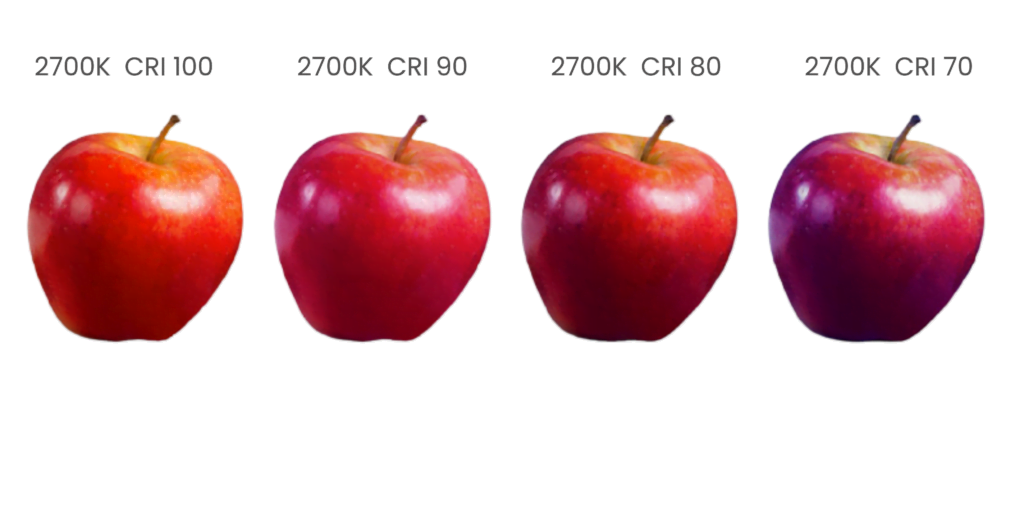
SDCM and CRI describe two very different properties of light. CRI is a measure of the extent to which the color of an object under a test light matches the color of that same object under a reference light. Thus, CRI says something about color reproduction of objects. SDCM, on the other hand, says something about the mutual color deviation of light sources themselves.
That difference is important in projects. A fixture can have a high CRI and still have mutual color difference within a series. Conversely, a fixture can have a neat SDCM value but a more average color rendering. So you can’t see these values as substitutes for each other. They simply answer a different question.
What do you look for in color reproduction?
If you want to assess how object colors are rendered under light, you look at CRI. This is relevant in applications that involve the perception of materials, finishes or products. Thus, CRI helps with the question of how faithfully colors appear under a light source.
What do you look for in color consistency?
If you want to assess whether multiple fixtures show the same light color among themselves, you look at SDCM. This is especially relevant when luminaires are visible together in one room or on one surface. In that case, the issue is not the color rendering of objects, but whether the overall light image looks calm and uniform.
What do you consider when choosing lighting?
When choosing lighting in a project, you don’t just look at lumens and wattage. Those say something about luminous flux and power, but not enough about visual comfort, maintenance and performance over time. In practice, you always evaluate a fixture more broadly. Consider color rendering, glare, maintenance factor, lumen maintenance and color consistency. It is precisely the combination of these specifications that determines whether a solution is not only right on paper, but also continues to perform well in use.
Don’t just look at lumens and wattage
A fixture with high efficiency is not automatically the best choice. In an office, school or healthcare environment, for example, glare also plays a role. The UGR value is a well-known measure for this. It says something about disturbing glare caused by luminaires in an indoor space. Color rendering is also important. CRI indicates the extent to which colors of objects under a light source match those under a reference light. Especially in stores, for example, where materials, products or shades have to look good, you cannot separate this value from the rest of the specification.
Longer-term performance should also be considered. The maintenance factor helps determine how much system luminous flux to include in a lighting plan in order to still achieve the desired light level in the future. This factor is related, among other things, to the decrease in luminous flux, failure of light sources, contamination of the fixtures and contamination of the space. A low maintenance factor can result in more luminaires needed or more installed luminous flux, and thus higher investment and operating costs. Thereby, L and B values indicate how much luminous flux remains after a certain number of burning hours and what percentage of LEDs fall below that limit. This is therefore different from failure.
SDCM belongs in that list as a visual quality parameter. Whereas CRI says something about color rendering and UGR about glare, SDCM says something about the mutual color consistency of light sources. In a project with many identical fixtures, this can make the difference between a calm overall image and an installation in which one fixture looks just different from the other. Therefore, SDCM is not a separate detail in the data sheet, but a specification that you have to assess together with comfort, lifetime and maintenance.
When do you explicitly include SDCM in a specification or lighting plan?
It makes sense to explicitly include SDCM as soon as multiple luminaires combine to form a single visible light image. Consider long ceiling lines in offices, a grid of downlights, wall lighting with multiple spotlights or hospitality projects with quiet, bright ceilings and walls. Small color deviations quickly become visible on a white wall when multiple luminaires illuminate the same wall. Especially in those types of applications, a clear SDCM requirement prevents discussion upon completion.
This is also relevant in renovations and expansions. When new luminaires are placed directly next to existing luminaires, not only the specified color temperature is important, but also the spread around that color point. A 3000K luminaire with a wide tolerance may look different in practice than an existing product with the same nominal light color. By defining SDCM in advance in the lighting plan or specifications, you make the desired visual quality more concrete and prevent color consistency from becoming a topic of discussion only on site.
Common misunderstandings about SDCM
There is still quite a bit of confusion around SDCM in practice. That makes sense, because in data sheets many color-related terms are close together. Still, it is important to keep them well apart, especially if you are specifying lighting for a project that combines comfort and appearance.
SDCM is not the same as color temperature
Color temperature says something about the impression of the light, for example, warm white or cool white. SDCM says something different. That value does not describe whether a fixture is 2700K, 3000K or 4000K, but how close the actual light color of that fixture is to the intended color point. So two fixtures can both be 3000K and still have a visible deviation between them if the color consistency is less tight.
SDCM is not the same as CRI
CRI and SDCM are both about color, but answer a different question. CRI is a measure of the extent to which the color of an object under a test light matches that under a reference light. Thus, CRI is about color reproduction of objects. SDCM, on the other hand, is about the mutual deviation between light sources themselves. Therefore, a luminaire can have a high CRI and yet be less tight in color consistency. Conversely, a luminaire with neat SDCM can still have more average color rendering.
A low SDCM value does not solve everything
A low SDCM value is valuable, but not enough to automatically label a luminaire as good or suitable. Even then, issues such as optics, glare, color rendering, maintenance and lumen maintenance simply remain relevant. Moreover, the visibility of color differences also depends on the application. LEDs within the second and under certain circumstances also the third ellipse can be perceived as the same or very similar, while differences from 4 SDCM onwards become clearly recognizable. This means that the correct requirement should always be determined in relation to the project, not separately.
Summary
SDCM says something about the color consistency of light sources. It shows how small or large the color deviation is between luminaires with the same specified light color. This is particularly relevant in LED lighting, because luminaires of, for example, 3000K and CRI>90 can look just a little different in practice.
In projects with multiple fixtures next to each other, this can quickly become apparent. Think ceiling lines, grids with downlights, track systems or wall lighting. Therefore, when choosing lighting, look not only at lumens, wattage or color temperature, but also at properties such as CRI, UGR, maintenance factor, LB value and SDCM.
Those who understand SDCM properly avoid surprises in the final image. Especially in projects where tranquility, unity and visual quality are important, it is wise to consciously include color consistency in the product specification and lighting plan.
Need advice?
Are you working on a project where color consistency, visual comfort and a calm light display are important? Then it’s smart to factor SDCM into the equation early on, along with things like CRI, UGR, maintenance and efficiency.
Want to spar about the right specifications for your project, or have a correct lighting plan created? Then feel free to contact us or request a lighting plan directly.