





The influence of music in retail
This is how audio becomes a silent salesperson in your store
Retailers are increasingly realizing that sound and music are powerful tools to enhance the shopping experience. Even “just background music” has an effect. In consumer surveys, a large majority indicate that music makes the shopping experience better. But audio can be much more than a mood creator. If you use it smartly, you also influence brand recognition, time perception, walking pace and buying behavior.
In this article, we dive into the positive impact of music on customer experience, supported by research and real-world examples. We also show how to make music a permanent part of your brand, through sonic branding and brand triggers. And very practically, how to translate this to a store floor with a good audio plan.
Why sound works so well in stores
People don’t experience a store with one sense at a time. Everything counts. Light, materials, smell, the layout and therefore sound. That multisensory nature is what makes audio so interesting. Music can evoke emotions at lightning speed, without anyone consciously thinking about it. And that emotion then colors how someone experiences your store, how long someone stays, and how easily someone makes a purchase. This is exactly why small adjustments in music, such as tempo or volume, can cause surprisingly large differences in some situations.
Sonic Branding
Sonic branding means using music and sound strategically to communicate your brand. It goes beyond a jingle under a video or a random in-store playlist. Audio can play a role at multiple points in the customer journey, influencing perception, attention, memory and affect, among other things. A well-chosen sound matches and reinforces your brand values. This works extra strongly because music can evoke emotions. Positive emotions stimulate trust. And trust is related to repeat purchases and to customers actively recommending your brand.
Sonic branding in practice
Think of recognizable audio signatures from major brands. A few tones can be enough to instantly evoke the brand image. That’s the goal. Making sure your brand is recognizable not only in images, but also in sound. For retail, that doesn’t mean you suddenly have to have a “sound logo.” It can also be more subtle. An own style, a fixed atmosphere, recognizable moments in the store. As long as it is consistent.
Fire Triggers
A brand trigger is an element that keeps recurring in your communication that creates or reinforces recognition. Auditory examples are very familiar. Think of a short tone, a sound or a recurring musical motif that instantly triggers something in the mind.
Brand triggers have roughly two functions. The first is brand recognition. An auditory trigger can make consumers immediately think of your brand without seeing the name. The second is to reinforce other triggers, especially visual ones. If something you see already evokes a feeling, music can reinforce that feeling. A simple example is that when you see a familiar product, sometimes you almost automatically “hear the sound with it.” You see it and your brain completes the audio. You can consciously use that effect as a retailer by aligning audio and visual identity.
Music influences customer behavior
In addition to brand perception, background music also directly influences in-store behavior. One of the best researched factors is tempo.
A well-known study has shown that a slower pace, below 72 BPM, causes customers to stay in the store longer and increases the purchase price. The difference can be large. That study involved a 39.2% increase over higher tempo music, starting at 94 BPM. Along the same lines, it is often mentioned that average spending with slow music was significantly higher than with uptempo music.
Why this works is actually logical. Quieter music slows the walking pace. Customers look just a bit longer, take in more stimuli and discover additional products faster.
Faster pace can also be helpful
Faster pace creates urgency. In environments where throughput is important, such as at peak times or fast formulas, it can actually help. Think of situations where you want people to choose and checkout faster. It’s not about “always slow,” it’s about aligning with the goal of the moment.
Music influences perception
Music influences not only how long people actually stay, but also how long they think they were there. Music and environmental sounds affect time perception, but music often proves stronger in this.
If the music is rated positively, the time in the store feels shorter than the actual time. If the music is perceived as unpleasant, people actually rate their shopping time higher. This is especially relevant at queues, fitting rooms and service points. Good music makes waiting less irritating. Bad music can make every minute feel longer.
Genre and style
Not only tempo and volume, but also genre determines the mood. Here one principle is very important: congruence. The music must fit what you are selling, the store concept and your target audience.
A classic example comes from research in a wine store, where French and German music was played alternately. On days with French music, more French wine was sold, and with German music, more German wine was sold. Most customers afterwards denied that music influenced their choice. So the effect often works subconsciously.
You see this principle more widely in retail. Music acts as a context signal. It helps the brain determine more quickly what “fits” the moment. That makes choosing easier.
Classic as a luxury signal
There is also research showing that classical music can contribute to a more luxurious experience. For example, experiments and observations mention that guests in restaurants spend more with classical music, and that a jeweler can be perceived as more luxurious and quality when classical music is playing. Classical is then subconsciously linked to premium and exclusivity.
Which genres do what?
You can use genre as a driver of emotion and arousal. Research and practitioner insights include these directions:
Classical music can enhance enjoyment and support premium associations.
Pop and country are more often associated with higher arousal, that is, more energy.
Slow jazz or classical with a calm tempo helps if you want to associate a homey and calm feeling with your brand or store.
Soul and funk are cited as music that can combine multiple effects, such as enhancing positive emotions and increasing arousal.
Don’t think of these as hard rules, but as smart starting points. The effect stands or falls with your target audience and your formula.

Volume and timbre
Tempo and genre often get attention, but volume and timbre matter at least as much in practice.
Practical examples from audio expert Hein Heijen show, for example, that volume can be a predictor of beverage turnover in the hospitality industry. Louder music causes people to talk to each other less, which makes them drink more and thus order more. At the same time, it also clearly shows that too loud music in a store can cause people to not even go inside.
Tone and “lightness” of sound can also drive associations. As an example, high, fresh tones can increase sales of white wine and champagne, while lower and heavier tones can steer towards red wine. Whether you can translate that one-to-one to retail depends on your industry, but it mainly illustrates this: sound drives associations, and associations drive behavior.
In practice
Many stores already do something with music, but lack three things: consistency, direction and coverage.
- Consistency means that your sound fits your brand and comes back. Not just today, but also next month.
- Steering means consciously deploying tempo, genre and volume by moment or zone. Think quiet in the morning, a little more energy on Saturday afternoon, more relaxed again toward closing.
- Coverage means it’s technically correct. No dead spots, no spots that are too loud, and no cluttered soundstage when crowded.
And that is exactly where the difference between “turning on music” and “deploying audio” comes in.
Spottune in retail
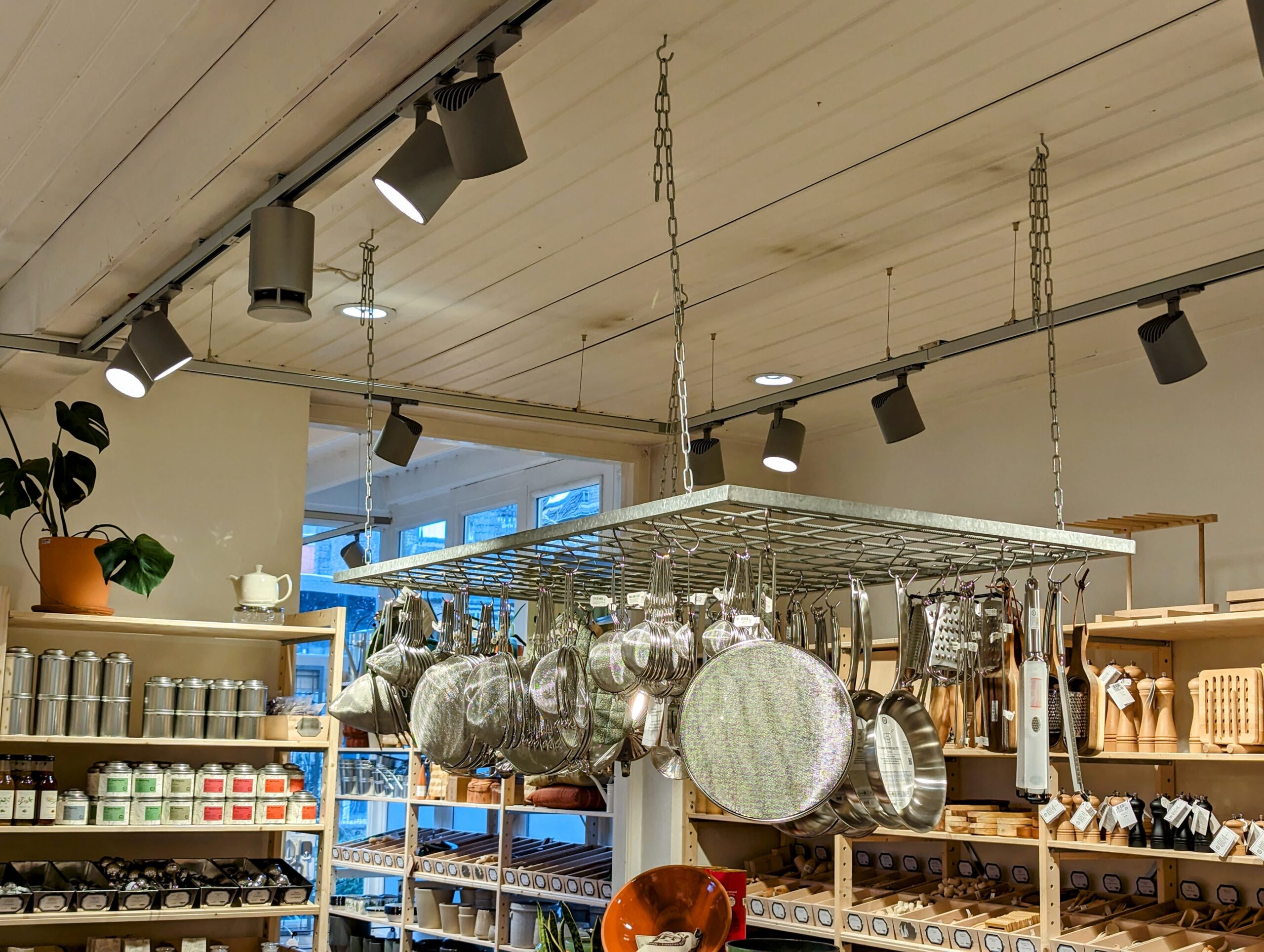
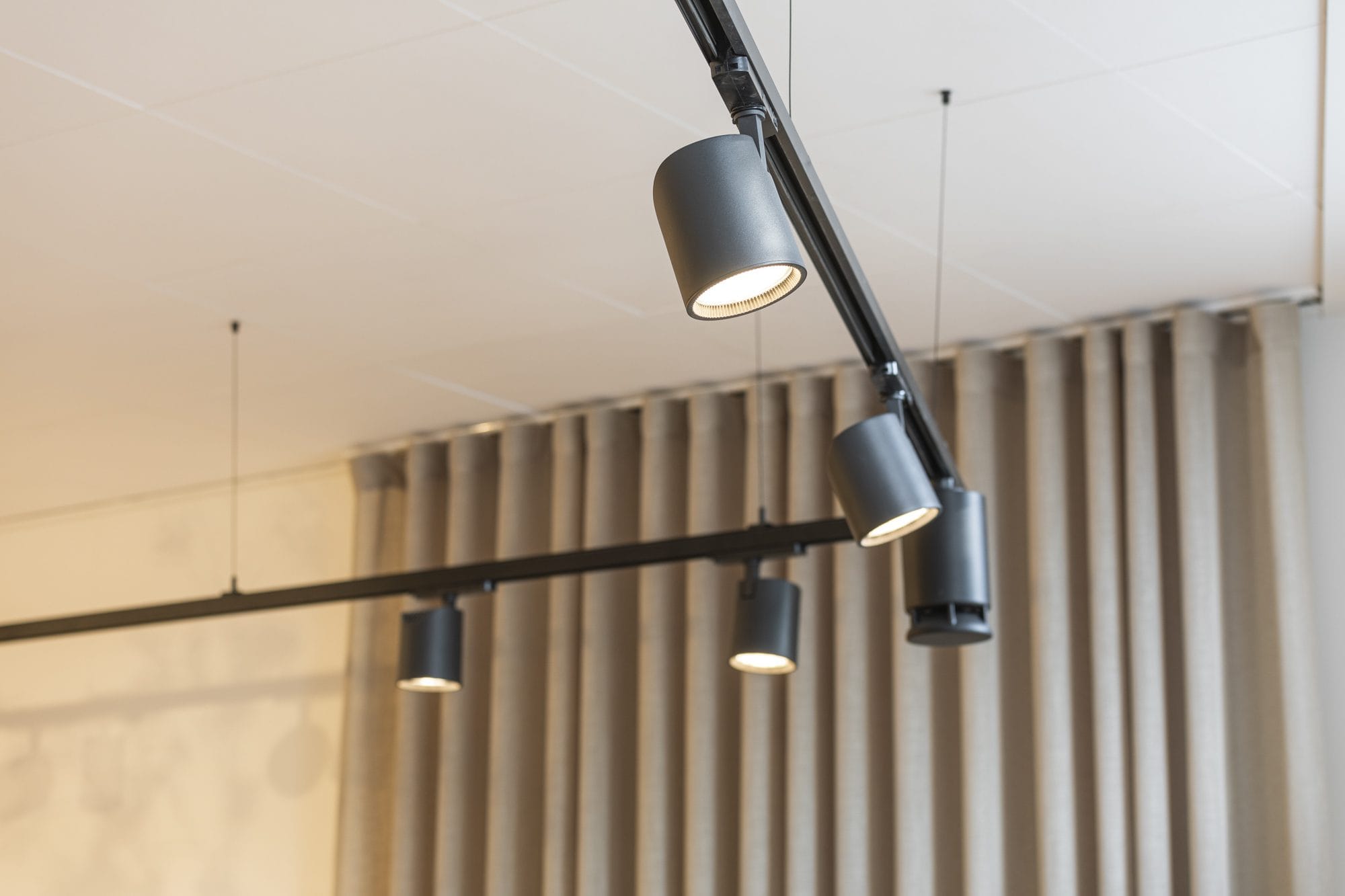
Lixero is a distributor of Spottune audio. Spottune is a wireless audio system that you simply place in track rail. That makes it perfect for stores, because track rails are often already in place and because store layouts change. You move your spots, and your audio instantly moves with you. No extra cable runs, and you keep the ceiling look sleek.
For retail designers and chains, this is practical. You design a concept that can grow with seasons, campaigns and new routing. Audio should not be the limiting factor in that.
Request your free audio plan
Want to know what music and sound can do in your store, and especially how to set it up well technically and content-wise?
Then ask Lixero for a free audio plan request. We make a plan for your store in which you immediately see where and how many speakers are needed for the best result. That way audio doesn’t become an afterthought, but a well thought-out layer in your formula.