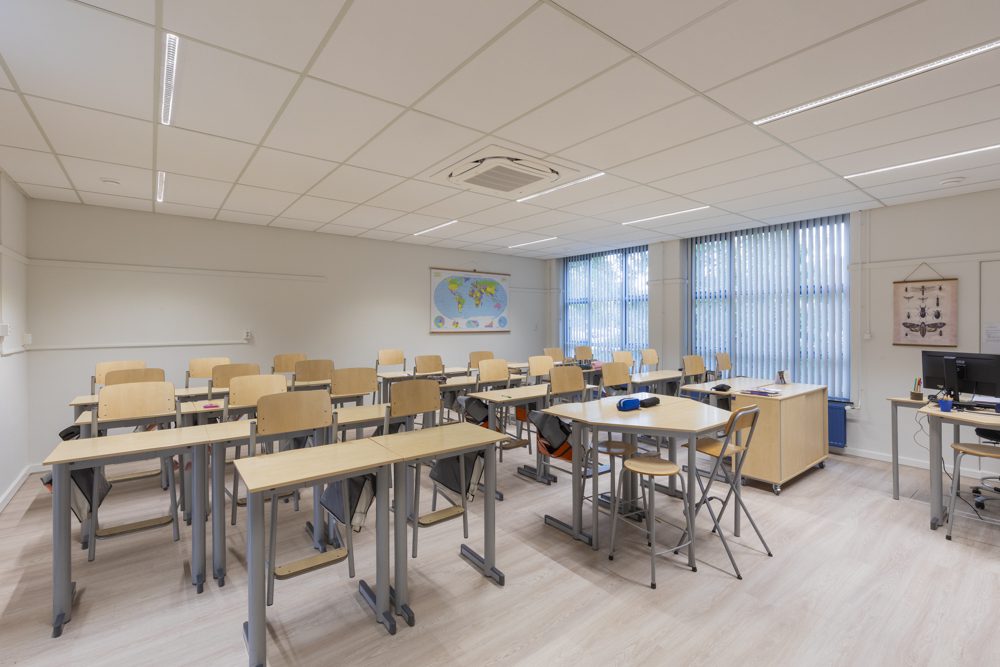
A good school building does more than provide space for education. It supports concentration, comfort and health. Within the Fresh Schools guideline, therefore, various components of the indoor climate are considered, including air quality, temperature, acoustics and light.
Precisely light plays an important role in this. Not only artificial light, but also daylight, glare, shading and the way lighting is controlled. Because a room with too little light is tiring, while too much direct sunlight can cause annoyance, heat and loss of concentration.
In our white paper, we explain the role lighting plays within the Fresh Schools guideline and what you as a school, consultant or installer need to consider.
Download the whitepaper and receive practical information on the role of light within the Fresh Schools Directive. We take you through the main points of interest around artificial light, daylight, shading, comfort and energy consumption.
Lighting in schools is not just about adequate light on the work surface. It is about the right balance between artificial light, daylight and comfort. Consider good lighting for reading and writing, as well as preventing glare on digiboards, monitors and workstations.
Solar shading also plays an important role in this. Good blinds help to limit annoying sunlight, prevent overheating and better control daylight. Combined with smart lighting and sensors, this creates a pleasant learning environment that is both comfortable and energy-efficient.
In our white paper, we take a closer look at the key issues surrounding light within the Fresh Schools guideline. Among other things, you’ll read how artificial light, daylight and shading combine to influence comfort in classrooms, learning plazas and other educational spaces. From light levels and glare to controls, sensors and energy consumption.
This white paper is written for anyone involved in new construction, renovation or sustainability of school buildings. Think of school boards, facility managers, installers, consultants, architects and project teams concerned with healthy and future-proof educational environments.
Want to know how light contributes to a Fresh School? Then download our white paper and find out what to consider when it comes to lighting, daylight and shading in educational buildings.