





Endcaps in the spotlight
In today’s retail world, where physical stores must constantly adapt to the challenges of e-commerce and changing consumer behaviors, innovation is more crucial than ever. Recent research has opened new perspectives on the potential of displays and projections within the retail world. Focusing on the impact of endcap (costing) projections in supermarkets, this study provides valuable insights for retail owners, both from chains and independent stores, on how the right technology applications can significantly increase customer engagement and sales.
The impact of covid-19 and e-commerce on physical retail
In an era when the retail industry has faced unprecedented challenges from the COVID-19 pandemic and the continued rise of e-commerce, the physical shopping experience remains an essential part of consumer spending. Although the pandemic and the rapid growth of online shopping have undeniably impacted shopping behavior and preferences, the recent survey shows that the majority of consumers, particularly in the food sector, still prefer physical stores to digital alternatives. According to a study by eMarketer (2021), more than 85% of all shopping in the United States takes place in physical stores. This preference for physical stores presents a unique opportunity for retailers to rethink and optimize their in-store marketing tools.

Relevance in a changing marketplace
The pandemic has led to a shift in consumer behavior, with safety and convenience becoming increasingly important. Physical stores face the challenge of addressing these changing needs while providing a unique and engaging shopping experience that online shopping cannot match. This requires a rethinking of store design, with an emphasis on safety, efficiency and a pleasant shopping environment.
Innovation of in-store marketing
Endcaps, traditional displays at the end of store aisles, have long been an effective tool in retailing. However, with the integration of new technologies such as visual projections and sensory elements such as sound and smell, endcaps can be transformed into powerful marketing tools. These advanced endcaps can capture customers’ attention and enrich their shopping experience, increasing sales and brand loyalty.
Benefits for physical stores
Despite the growth of e-commerce, physical stores offer unique advantages that cannot easily be replicated online. The direct interaction with products, the ability to touch (and taste) products, and the immediate availability of goods are just a few aspects that customers value in physical stores. By highlighting these benefits and combining them with innovative marketing tools such as endcap projections, retailers can create an immersive and distinctive shopping experience.

The vividness effect
In an era when consumers are inundated with information and stimuli, vividness theory plays a crucial role in understanding consumer behavior, especially within the retail environment. This theory, introduced by Nisbett and Ross in 1980, states that vivid information produces more images in people’s minds, which in turn stimulates consumption. Vivid information attracts and retains people’s attention and stimulates their imagination, leading to a more intense experience and greater engagement with the product or message.
The power of perception
Vivid information tends to be more persuasive and lasting in consumers’ minds. This is because it contains more sensory detail and emotional content, making it easier for consumers to imagine the use or experience of a product. In the context of retail, this means that vibrant product presentations can be more effective in attracting customers and influencing their buying decisions.
The influence of light and audio
In the modern retail environment, technologies such as videos, audio and animation have become tools to increase the vividness of product presentations. These resources add an extra dimension to the shopping experience by increasing the richness of the information presented. For example, videos and animations can demonstrate complex product features in an understandable and engaging way, while audio can enhance the atmosphere and create an emotional connection to the product.
In practice
The practical application of vividness includes the use of bright, dynamic images and engaging sounds to create an engaging shopping environment. This can range from high-definition screens showing product videos to carefully selected background music that reflects brand identity. Combined, these elements create an immersive experience that captures customers’ attention and increases their engagement with the brand.

A question of balance
In the quest to optimize the shopping experience through visual aesthetics, the balance between complexity and appreciation plays a crucial role. This dynamic, deeply rooted in vividness theory, underscores the importance of finding the right level of complexity in visual presentations to attract and retain consumers’ attention.
The relationship between the complexity of a visual element and its appreciation by consumers is not linear, but rather follows an inverted U-shape. This means there is an optimal level of complexity that maximizes consumer attention and interest. Simple stimuli may be easy to process but run the risk of not attracting enough attention. On the other hand, overly complex stimuli, although capable of grabbing attention, can lead to cognitive overload, reducing engagement.
Moderate complexity of endcaps
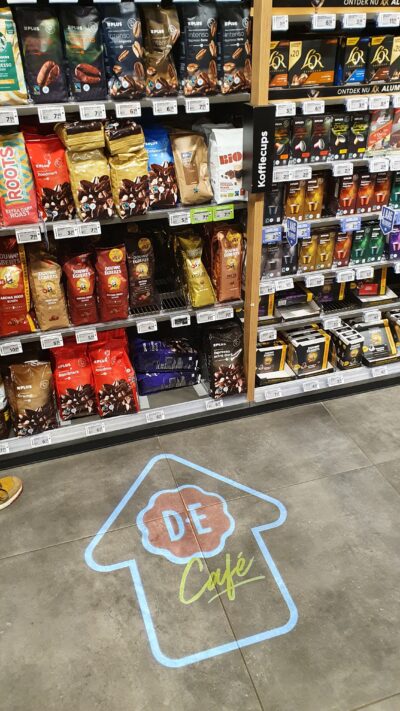
In the context of retail businesses, such as supermarkets, the use of moderately complex visual projections on endcaps is an example of how this balance can be achieved. Research shows that endcaps with moderately vivid projections – not too simple, but also not too complex – generate higher sales than traditional or very vivid projections. This moderate complexity manages to capture customers’ attention without overwhelming them, leading to deeper engagement and greater likelihood of purchase. A great example is Plus Supermarkets, which uses sustainable projection spots to give certain brands or products extra attention.
The importance of design
The challenge for retailers and designers is to find the right balance in the use of visual and auditory elements. The goal is to create an attractive, but not overwhelming environment that encourages customers to spend time exploring and ultimately making purchases. The use of aids, such as lighting, digital displays and audiovisual effects, should be considered to achieve this optimal balance.

Practical research
In a study of the effectiveness of endcap projections in retail, a partnership was formed with three supermarkets in a major European city. This field study, aimed at understanding the impact of digital projections on customer shopping behavior, provides valuable insights for the retail industry.
The study was conducted in three different supermarkets, each located in an urban area. In each store, two specific endcaps were optimized: one for the presentation of nuts and the other for pasta and canned tomatoes. These products were chosen for their everyday nature and broad appeal. Projections were installed above these endcaps that presented the products to customers in a lively and interactive way.
To gain a reliable understanding of the effect of these endcaps on shopping behavior, trained research assistants were employed. These assistants discreetly observed shoppers’ behavior as they walked past the endcaps. Important was the focus on whether customers placed products from the endcaps in their shopping carts. A total of 11,883 consumers’ interactions were recorded during the 15-day study period, during which supermarkets were observed for 48 hours.
Sales data
To gain an in-depth understanding of the sales impact of endcap projections, actual sales data was also examined. This data was collected over a three-week period from all three supermarkets. By analyzing the total daily sales of the highlighted products, the impact of traditional, moderately vibrant and highly vibrant endcaps on sales could be assessed. These data offered a detailed picture of how different types of endcap projections actually affect sales.
Customer feedback
Continuing the earlier observations, the second part of the study focused on collecting and analyzing direct customer feedback. This phase of the study aimed to gain a deeper understanding of customer perceptions and engagement with different endcap designs.
Several research assistants were used to approach customers to participate in a survey. This approach took place after customers passed a predetermined point in the store, not immediately adjacent to the endcap, to minimize bias. A total of 1,037 customers participated in the survey, with a reward offered as an incentive for participation. Finally, the data of 859 respondents were analyzed.
The survey included questions to measure the level of attention customers paid to the endcap and their mental commitment to the product. Customers indicated their perception of the visibility of the endcap and rated how easily they could imagine themselves using or consuming the product. These data provided valuable insights into how effective the endcap projections were in attracting attention and driving engagement with the products.

Influence of noise
In the next field study, the methodology was further extended by adding audio and smell elements to the endcap projections. This part of the research focused on understanding the impact of these additional additions on customer attention and buying behavior.
The second study was conducted over a three-week period in the same three supermarkets, using a new product assortment. In this study, a moderately vivid projection was compared with projections that included sound or smell. The effects of this approach on sales were assessed by both customer observations and analysis of sales data.
The results
The results of these comprehensive studies offer important insights into how endcap projections can be used to improve store sales and profitability. These findings are of great value to both retail chain management and independent retailers.
Increase in sales
The study shows that adding a moderately vibrant endcap projection to traditional endcaps can lead to a significant increase in sales. In the specific research case, a moderately vibrant endcap projection resulted in an 8.3% increase in sales compared to a traditional endcap. Interestingly, adding sound to this moderately lively endcap realized a further 86% increase in sales compared to a moderately lively endcap without sound. These results underscore the potential of technologically enhanced endcaps to not only attract more customer attention, but also to significantly increase sales.
Endcaps as an advertising tool
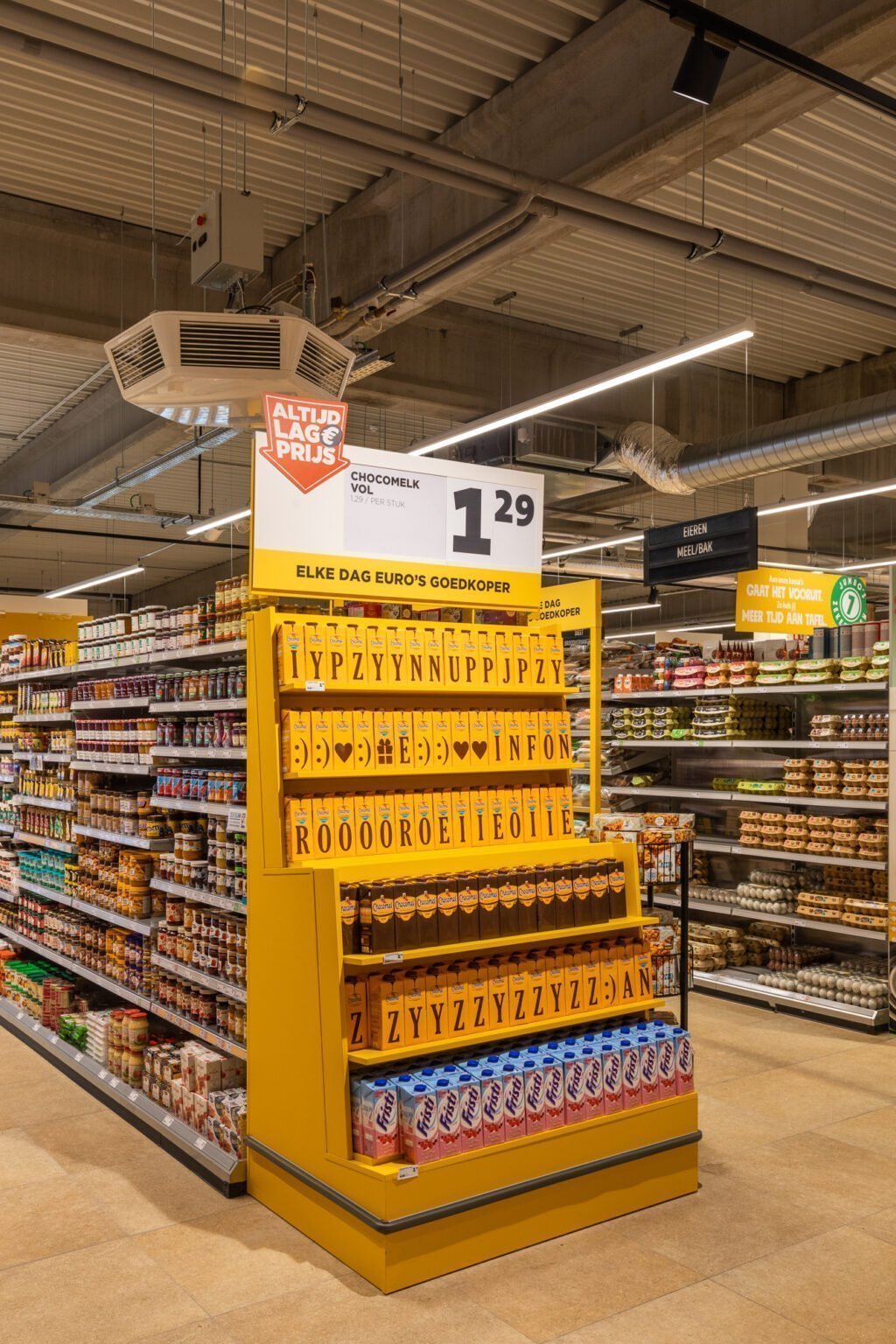
In addition to increasing sales, endcap projections also act as an effective advertising tool. These advanced endcaps can be used to introduce new products, promote special offers or increase brand awareness. The use of endcap projections allows retailers to charge higher rates than for traditional endcaps, contributing to higher profitability and a stronger in-store brand experience.
Getting Started
For retail managers, these findings offer concrete guidelines for maximizing the effectiveness of in-store marketing. By applying the right mix of technology, such as moderately vivid projections and audio elements, stores can more effectively advertise their products, increase customer engagement and ultimately boost sales.
Conclusion
This study provides valuable insights for retail managers striving to optimize their sales strategies. By deploying innovative endcap projections, stores can not only increase their sales but also provide a more dynamic and interactive shopping experience. The strategic use of these technologies, balanced with store aesthetics and branding, can be a key factor in the success of modern retail environments.
Advice and assistance
We are happy to help you optimize and improve your store. Your endcaps will be in the spotlight with the right lighting, and the customer experience will be even better with the right audio. Request a free consultation to discuss options or read more about our approach on this page.